Yurts Without Bathrooms vs Heated Cabins at Wyoming State Parks
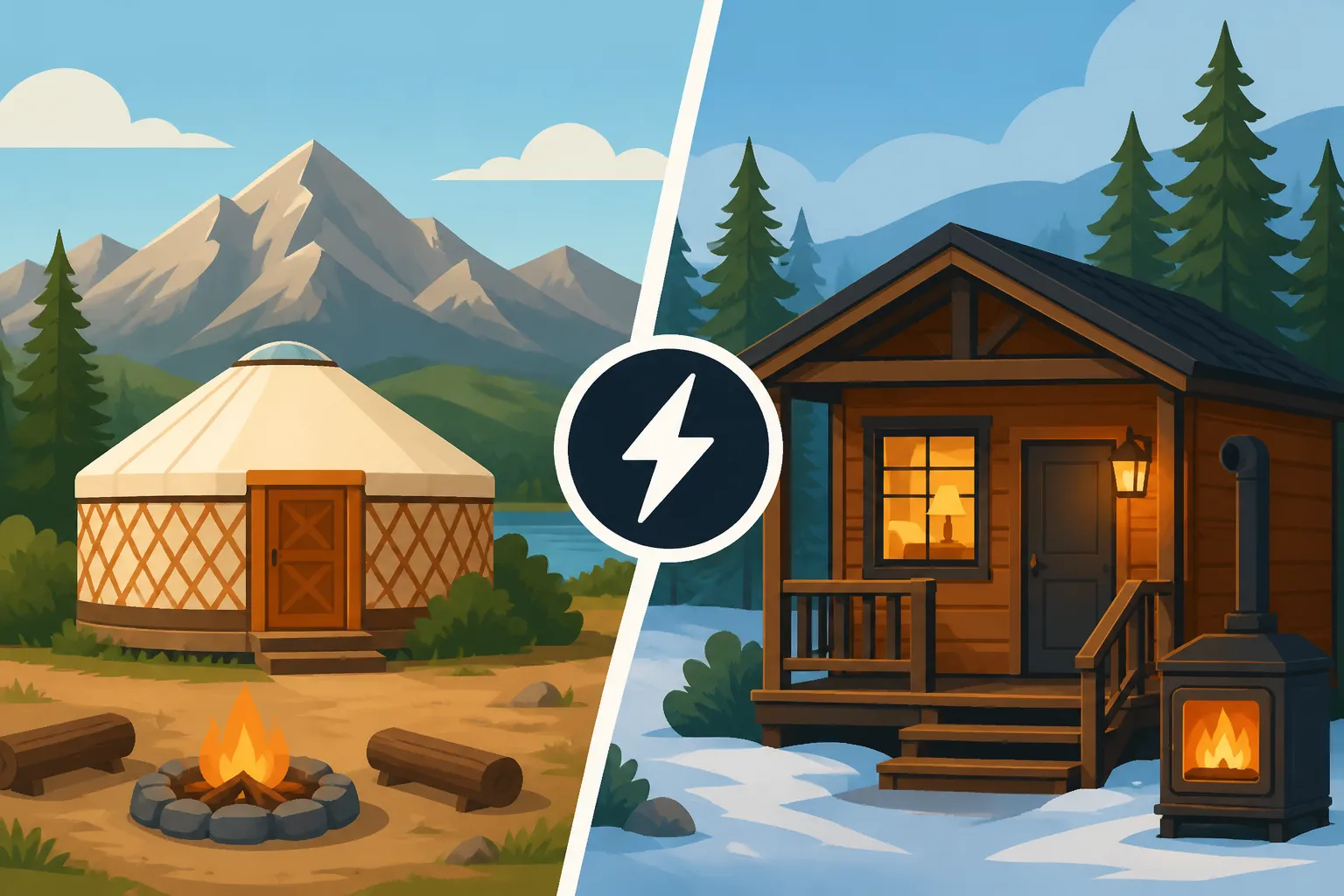
A yurt can look like a simple cabin online, while a heated cabin may sound like an easier way to camp in cold weather. The practical difference is what the specific rental provides—and what you will need to bring or use elsewhere. Here’s how to compare yurts without bathrooms with heated cabins at Wyoming State Parks before choosing a stay.
Start with the amenities, not the name
“Yurt” and “cabin” describe the kind of rental, but those labels do not tell you everything that matters for your trip. A name alone won’t establish whether you’ll have indoor water, a bathroom, a cooking area, electricity, or heat. Check the listing for the specific rental and dates you’re considering, and make your decision from those details rather than from a general idea of what a yurt or cabin should be like.
The distinction is especially important if you are considering Guernsey State Park. Wyoming State Parks, Historic Sites, & Trails says Guernsey State Park’s yurts have no bathrooms, kitchen, water, or electricity inside the yurts. That description sets a clear expectation for the interior, but it doesn’t answer every practical question about the site around the yurt. If you’re unsure where a listed service or facility is located, confirm its location with Wyoming State Parks, Historic Sites, & Trails before you reserve.
A heated cabin is not automatically a fully equipped cabin. The word “heated” addresses comfort in cold conditions, but it does not by itself tell you whether there is a bathroom, running water, a kitchen, or electricity. Nor should you assume that every cabin has the same setup. Read the rental description carefully and ask about any detail that could change how you pack or plan your meals.
| What to compare | Yurt without indoor facilities | Heated cabin |
|---|---|---|
| Bathroom | Confirm whether facilities are elsewhere and how to reach them | Check the listing; heat does not tell you whether a bathroom is inside |
| Water | Plan around the stated absence of water inside a Guernsey yurt | Confirm whether water is available inside, nearby, or not at the rental |
| Cooking | The Guernsey yurt description says there is no kitchen inside | Check whether the cabin has a kitchen or whether you need to bring cooking gear |
| Electricity | The Guernsey yurt description says there is no electricity inside | Confirm whether power is provided and what the listing says it supports |
| Heat | Check what the property listing says about the yurt | Confirm the heating arrangement and any instructions for using it |
| Packing | Expect to plan for meals, lighting, water, and bathroom access | Pack according to the confirmed amenities, not the word “cabin” |
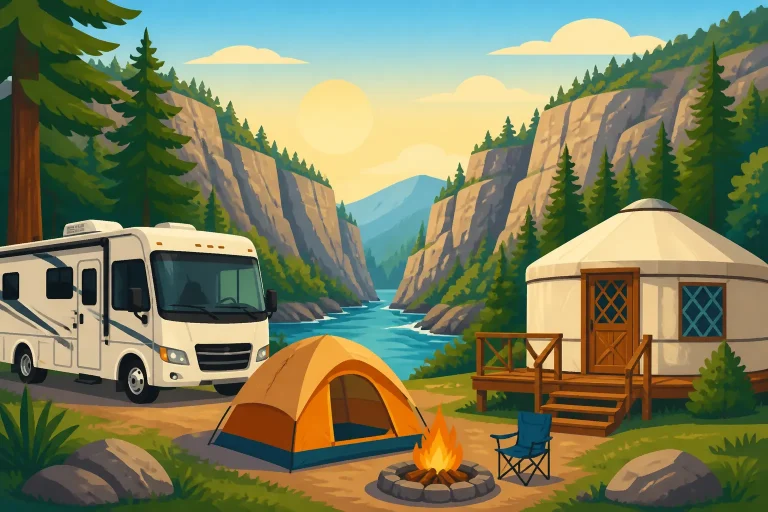
This comparison is a starting point, not a substitute for the rental listing. The Guernsey details apply to its yurts; they should not be generalized to every yurt in Wyoming. Likewise, a heated cabin at one park may not match a cabin at another. For a broader look at different rental styles, see Cabins, Yurts and Camp Shacks Across Wyoming State Parks and What Is a Wyoming State Park Yurt Like Inside?.
The most useful question is not simply “Is it a cabin?” or “Is it a yurt?” It is “What will be inside this particular rental, and what will I need to use elsewhere?” That framing helps prevent surprises whether you’re traveling with children, cooking at camp, arriving in cold weather, or trying to keep the trip low-effort.
Decide how much self-sufficiency suits your trip
A yurt without a bathroom, kitchen, water, or electricity inside can still suit campers who are comfortable organizing those needs around the facilities and services confirmed for their stay. The trade-off is that the space itself does not provide those amenities. You may need to carry supplies from your vehicle, plan meals that don’t depend on an indoor kitchen, and think through how you’ll manage lighting and water.
For a short, simple stay, that arrangement may be manageable. For a trip where convenience is central, the missing facilities may affect the whole day. Consider what happens after you arrive: Can you prepare food without a kitchen inside? What will you use for light if there is no electricity inside? Where will you get water, and how will you handle bathroom visits? If the official listing does not make those answers clear, ask Wyoming State Parks, Historic Sites, & Trails rather than filling in the blanks yourself.
A heated cabin may reduce one particular concern: staying warm inside the rental. That can matter if you want an indoor place to return to after time outdoors or if the weather makes a tent feel like too much effort. But heat does not remove the need to verify other essentials. If the cabin lacks a kitchen or indoor bathroom, or if water and electricity aren’t provided, your trip still requires planning around those gaps. Compare the confirmed facilities, not the assumed comforts associated with the word “cabin.”
Think about how you want to spend your time. If the goal is to make simple meals and spend much of the visit outside, an uncomplicated rental may fit. If you want a more comfortable indoor base, a heated cabin could be a stronger candidate, provided its specific amenities fit your needs. If you’re choosing primarily because someone in your group needs reliable access to a bathroom, water, or power, verify those arrangements before booking. A rental’s category is not enough to establish that it will meet those needs.
Your group’s routines matter as much as the building. Someone who likes to make coffee or prepare breakfast indoors may feel the absence of a kitchen more than someone content to pack ready-to-eat food. A traveler who needs power for a particular device should not assume that a heated cabin includes electricity. If you’re bringing children or older relatives, consider how often they may need access to a bathroom and how comfortable they are using facilities outside the rental. These are practical fit questions, not reasons that one accommodation is universally better.
If you expect to do most of your cooking outdoors or with portable equipment, check the applicable park rules and the rental details before deciding what to bring. Don’t assume you can use any particular appliance or fuel at the rental. For a yurt-focused packing discussion, Cooking Without a Kitchen at a Wyoming State Park Yurt can help you think through meal planning. For a cabin, Bedding, Cookware and Water: Packing for a Wyoming State Park Cabin offers a checklist-oriented way to consider what the rental may not supply.
There is also a difference between warmth and convenience. Heat can make a cabin more comfortable in cold conditions, but it doesn’t necessarily mean you can arrive with little preparation. You may still need your own bedding, cookware, drinking water, lighting, or other supplies, depending on the official description. A yurt without indoor heat, if that is what the listing confirms, requires a different comfort plan than a heated cabin. Check the actual listing for both what is provided and what guests are expected to bring.
For a wider comparison of lodging types and site features, see Picking a Wyoming State Park by Campsite, Cabin and Hookup Type. If cold-weather comfort is your main concern, Heated Cabins for Cold-Weather Camping at Wyoming State Parks may help you focus on the right questions. The goal is to match the rental’s stated setup to your group’s habits, rather than to rely on a general expectation about yurts or cabins.
Plan around the facilities you’ll use outside the rental
When a rental does not include a facility inside, the location and arrangement of nearby facilities become part of the accommodation choice. For the Guernsey yurt, the official description tells you what is not inside, but you should confirm the details that affect your routine: where the facilities you’ll use are, whether they are available during your stay, and how you’ll reach them from the rental. Ask Wyoming State Parks, Historic Sites, & Trails if the listing does not answer those questions.
This matters in ordinary situations as much as in bad weather. A walk to a bathroom or water source may feel minor in comfortable conditions and less convenient after dark, during a cold spell, or when someone in your group is tired. Think about how often you’ll need to make that trip, whether you’ll be carrying supplies, and whether the route works for everyone traveling with you. If mobility is a concern, ask for specific information about the route and facility access rather than relying on a broad description of the property. Visiting Wyoming State Parks With Limited Mobility: What to Ask can help you organize those questions.
Electricity deserves the same careful check. “No electricity inside the yurts” is a meaningful detail for a Guernsey stay, particularly if anyone expects to charge a phone, use powered equipment, or rely on electric light. Don’t assume a nearby outlet is available or that access to electricity elsewhere means you can use it for any purpose. Confirm what the rental listing says and plan to bring a suitable alternative if you need one. Charging Phones and Devices at a Wyoming State Park Campsite can help you prepare for a stay where power access needs attention.
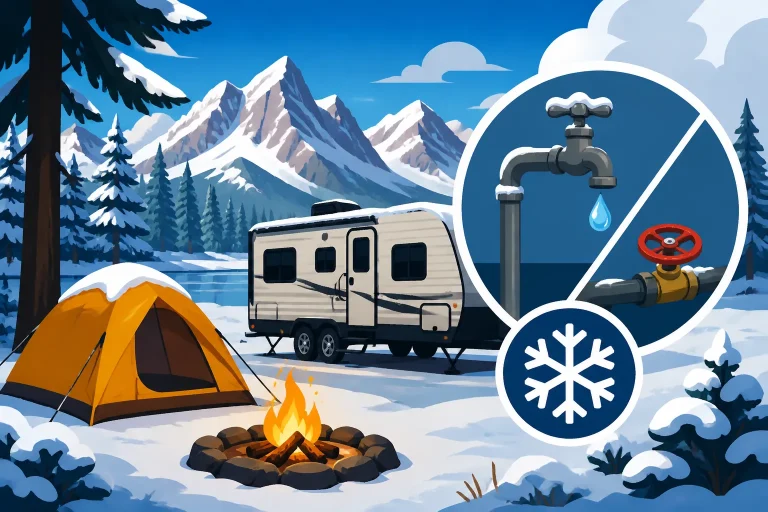
For water, distinguish between water inside a rental and water available elsewhere on the property. Those are not interchangeable when you’re planning meals, washing up, or carrying drinking water. The Guernsey description says there is no water inside its yurts; ask where water is available for your stay and whether the arrangement suits your group. If you’re traveling in a shoulder season or cold weather, check current service information with the park rather than assuming that a facility will be operating as it would in another season. Water and Restrooms at Wyoming State Parks in Spring and Fall covers why checking seasonal services can be useful.
Bathrooms are similarly about more than whether a building has one. Ask which facilities are relevant to the rental, how they are accessed, and whether the available setup works for the people in your group. If a guest needs a particular type of facility, get a specific answer before reserving. A general statement that a park has restrooms does not tell you the distance, accessibility, or availability that matters to your plans.
For a heated cabin, ask about the heat itself as well as the rest of the interior. The listing should guide you on what kind of heating is provided and any instructions guests need to follow. Then separately confirm bathroom, water, kitchen, and power arrangements. If the rental description is brief, make a concise list of open questions and ask them together. That is more reliable than inferring amenities from photographs, the cabin name, or the fact that it is heated.
Seasonal operation can affect the practical value of a rental. A listing may be available while some nearby services operate differently, so confirm the conditions for the dates you plan to travel. This is especially useful for trips when you’re counting on water, restrooms, or other facilities outside your rental. For more on seasonal lodging changes, consult Off-Season Closures for Wyoming State Park Cabins and Yurts and Why Water Systems Go Dry in Winter at Wyoming State Parks.
Choose the rental that fits your priorities
The decision usually comes down to what you need the rental to do. If you mainly want a sheltered place to sleep and are prepared to manage meals, water, lighting, and bathroom access without those amenities inside, a yurt may be a reasonable fit. If indoor warmth is a priority, a heated cabin may suit you better—but only if the listing also confirms the other facilities your group needs. Neither choice is automatically more comfortable for every traveler.
Use this checklist before reserving:
- Bathroom: Is a bathroom inside the rental? If not, what facility will you use, and how will you get there?
- Water: Is water available inside, or must you obtain and carry it from elsewhere?
- Cooking: Is there a kitchen or cooking equipment? If not, what meal plan and equipment are appropriate?
- Electricity: Is power available inside? If not, what do you need to bring or plan around?
- Heat: What does the listing say about heating, and what instructions apply?
- Bedding: Is bedding supplied, or should you bring your own?
- Access: Is the route to the rental and its shared facilities workable for everyone in your group?
- Season: Are the facilities you plan to use operating for your dates?
- Arrival: What are the check-in arrangements, and what should you do if you arrive outside the expected window?
Keep the answers tied to the exact rental. If you’re choosing among different parks, compare each listing separately. Wyoming State Parks, Historic Sites, & Trails says Curt Gowdy State Park has four camping cabins in Sherman Hills campground. That tells you where those cabins are and how many the park has, but it does not establish the amenities or heating setup of each cabin. Check the official description for the cabin you are considering before making plans.
Photos can help you understand a layout, but they are not a complete amenity list. A picture of a bed does not tell you whether bedding is included; a visible counter does not establish that there is a working kitchen; and a photograph of a heater does not tell you how it operates. Treat images as context, then use the written listing and direct confirmation for details that matter.
It can also help to decide which needs are non-negotiable and which are preferences. For example, indoor heat may be a strong preference, while an indoor bathroom could be essential for your group. Write those priorities down before comparing choices. If no listing clearly meets an essential need, contact the park before you reserve rather than expecting to adapt after arrival.
Think about the full trip, not just the overnight space. A rental with fewer interior amenities may mean more gear and more time spent organizing meals or carrying supplies. A more comfortable interior may simplify some parts of the stay without eliminating the need to bring bedding, cookware, or other essentials. Compare the rental’s confirmed facilities with your travel style and the work you’re willing to do. For arrival and key questions, see Arriving at a Wyoming State Park Cabin: Check-In and Keys.
A useful final test is to picture the least convenient part of your planned stay: getting water, preparing food, using the bathroom at night, or keeping warm when the weather turns. If the arrangement still sounds manageable and the listing supports your plan, the rental may be a good match. If that scenario makes the trip feel difficult, keep comparing options or ask the park for clarification before committing.
Frequently Asked Questions
Are all Wyoming State Park yurts without bathrooms?
No. The specific detail covered here applies to Guernsey State Park: Wyoming State Parks, Historic Sites, & Trails describes its yurts as having no bathrooms, kitchen, water, or electricity inside. Check the listing for any other yurt you’re considering rather than assuming the same setup.
Does a heated cabin automatically have a bathroom or kitchen?
No. Heating describes one feature, not the entire set of amenities. Confirm the bathroom, kitchen, water, and electricity arrangements for the specific cabin with Wyoming State Parks, Historic Sites, & Trails.
Is a Guernsey yurt a poor choice for a cold-weather visit?
Not necessarily, but comfort depends on the conditions and facilities confirmed for your dates, as well as the supplies and routines your group can manage. Check the rental details and seasonal services before deciding.
What should I ask before reserving?
Ask where you’ll get water and use the bathroom, whether cooking facilities and electricity are available inside, what heating is provided, and what you need to bring. Confirm any detail that is essential to your group directly with Wyoming State Parks, Historic Sites, & Trails.
Sources
- Wyoming State Parks, Historic Sites, & Trails — Wyoming State Parks, Historic Sites, & Trails – Rental Unit Information (checked November 23, 2026)
Disclaimer
This article is for general informational purposes only and does not constitute professional advice. Laws, prices and regulations vary by location and change over time. Consult a qualified professional for guidance on your specific situation. Wyoming Camping & RV is not a government agency and is not affiliated with any government agency.