Sinks Canyon State Park Camping: RVs, Tents and Year-Round Yurts
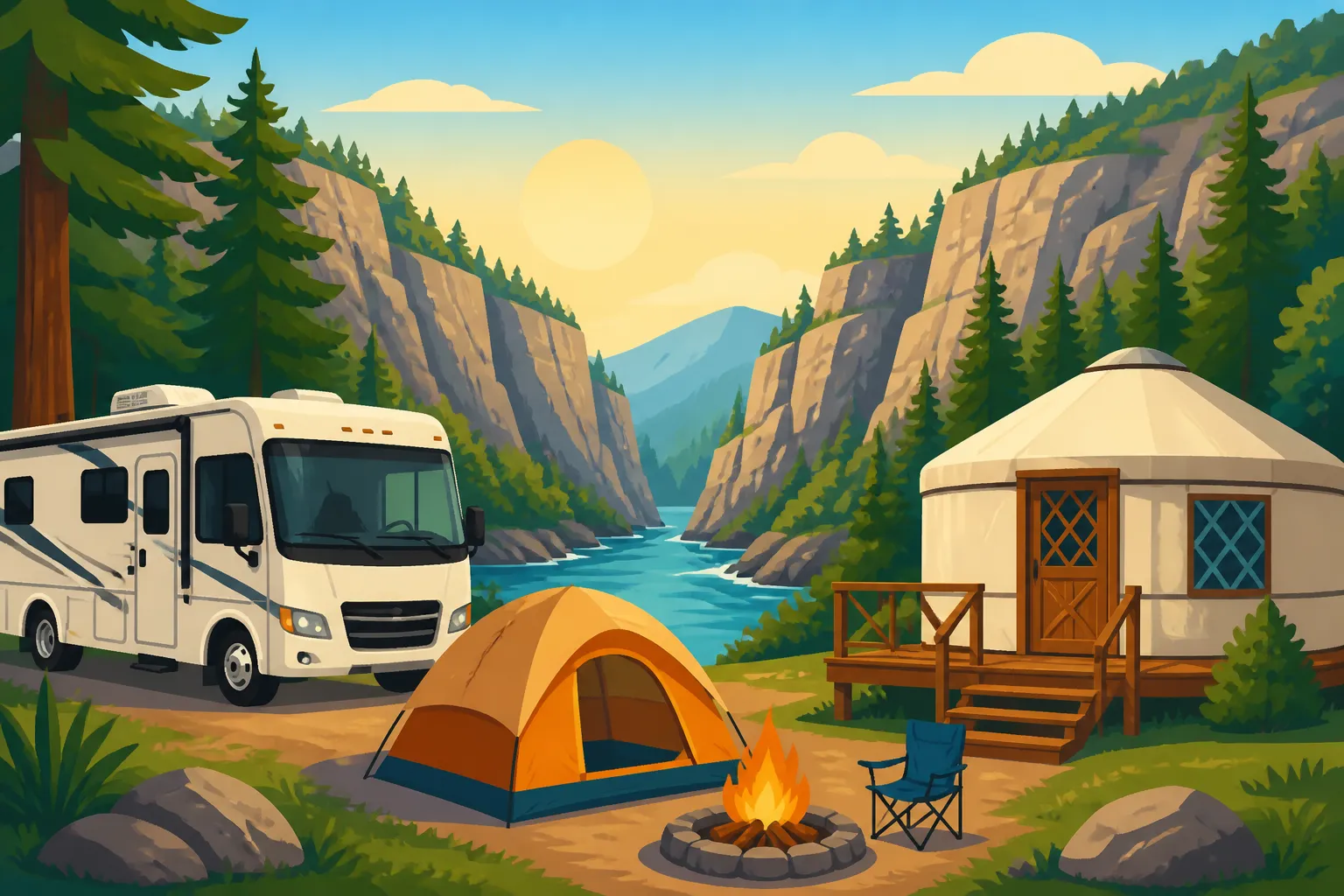
Sinks Canyon State Park campers need to match their setup to the stay: RV, tent or yurt. The park is listed for RV camping, and it offers four camping yurts, but a good plan still depends on current availability, site details and seasonal services. Here’s what to check before choosing a place to stay or setting out.
Choosing between an RV, tent and yurt
Wyoming State Parks, Historic Sites, & Trails lists Sinks Canyon State Park among the following State Park/s and or Historic Site/s provide this activity/amenity for Camping – RVs. According to Wyoming State Parks, Historic Sites, & Trails, Sinks Canyon State Park offers four camping yurts.
Those facts establish that RV camping is an activity at the park and that camping yurts are offered. They do not tell you which particular site types are open for your dates, what equipment a site includes or whether a yurt is available. Confirm those details before deciding which setup to bring.
| Stay type | A good fit when | Check before committing |
|---|---|---|
| RV | You want to travel with your vehicle-based sleeping setup | Site dimensions, surface, hookup details if relevant, access conditions and current availability |
| Tent | You prefer bringing your own shelter and camping equipment | Whether tent-appropriate sites are open, the site surface, exposure to wind and the rules for placing tents |
| Yurt | You want a shelter already set up at the park | Booking dates, occupancy, furnishings, utilities, access, what to bring and seasonal operating details |
The table is a planning aid, not a guarantee that every option is offered for every date. Site inventories and rental calendars can differ, and details may change. Use the official Wyoming State Parks information and reservation system to check the dates and specific site or rental you are considering.
If you are deciding between several types of stay, start with the parts of your trip that are least flexible. A large RV, a tent that needs a particular kind of surface or a yurt rental with set dates can shape the rest of the plan. Then compare the options that remain. Picking a Wyoming State Park by Campsite, Cabin and Hookup Type can help you think through which details matter when comparing accommodations.
It is also useful to separate the kind of lodging from the kind of camping experience you want. An RV or tent may give you more control over your own equipment, while a yurt can reduce the amount of shelter gear you need to carry. Neither option automatically means fewer planning tasks: each has its own questions about access, sleeping arrangements, facilities and what to pack.
Before you book or travel, confirm the exact location and type of stay, how arrival works, and whether the site or rental suits the people and equipment in your group. If you are comparing nightly camping with a roofed rental, include all applicable charges in your budget rather than comparing only the listed lodging amount. How Camping Fees Add Up at a Wyoming State Park offers a useful way to think about the pieces of a camping bill.
Planning an RV stay
The official RV listing is a good starting point, not a substitute for reviewing an individual site. RVs vary in length, width and turning needs, and a campsite description may have limits or conditions that matter to your rig. Before traveling, compare your vehicle and any towed equipment with the site details provided for the dates you want.
Check the surface and access description closely. A site that appears suitable in a general campground listing may not work for every vehicle configuration. Consider whether your rig can reach the site, maneuver within the available space and park without blocking nearby access. If the listing does not answer a question that could affect safe arrival, ask Wyoming State Parks through its official contact channels before you rely on an assumption.
Do not treat the word “RV” as proof that hookups are included. Confirm whether the specific site has the power, water or sewer connections you need, or whether you should plan for a self-contained stay. If you do not require hookups, check what the site provides anyway: the surface, parking arrangement, nearby services and any restrictions on equipment placement can still affect comfort.
A practical pre-trip check includes:
- Measure the RV and any trailer or other towed equipment as you travel.
- Compare those measurements with the specific site information.
- Confirm the hookup type, if any, rather than inferring it from a campground label.
- Check whether the route and arrival instructions suit your vehicle.
- Plan how you will manage water, waste and power if services are limited.
- Keep a backup plan in case the site or a service is unavailable.
If your trip depends on emptying tanks, topping up water or using a dump station, verify the relevant service and its operating status before leaving. Do not assume that a facility is available simply because it exists elsewhere in a park or is mentioned in an older trip account. RV Hookups at Wyoming Public Campgrounds: Who Has Them, Who Doesn’t and Which Wyoming State Parks and Historic Sites Have Dump Stations? can help you frame the questions to check.
The same care applies to late arrivals. Confirm the arrival procedure for your booking and how to locate your site if staff are not immediately available. Keep the reservation details accessible offline, and avoid arriving with a plan that depends on getting online at the campground. No Cell Signal at a Wyoming State Park: Planning Ahead covers practical ways to prepare for limited connectivity.
If you are traveling in a large or unfamiliar rig, leave room in your schedule to check the route and campground information before departure. Weather can also affect vehicle handling and comfort, so consider whether your equipment and driving plan are suitable for the forecast. For Wyoming trips, it is sensible to plan for changing conditions rather than assuming that a calm start will last through the whole stay.
Planning a tent stay
A tent trip can be flexible, but the details of the site matter. Confirm that a tent-appropriate site is available for your dates, then check the listed surface, parking arrangement and any rules about where the tent may be placed. A site designed around a vehicle pad or another accommodation may not offer the layout you expect.
Think about the tent and the conditions it must handle. Bring stakes and guylines suited to your shelter, and check that they can be used at the site without damaging vegetation or creating a hazard. Wind can make a tent difficult to pitch and uncomfortable to sleep in, so practice setting it up before your trip and inspect the forecast before you leave. Wyoming Wind at State Park Campsites: Staking Down Your Tent has more on preparing for exposed conditions.
Pack for the possibility that the campground has fewer services than you expect. Confirm where water and restrooms are available, whether those facilities are operating for your dates, and how far you may need to walk from your site. If you plan to cook, check the park’s current rules and any fire restrictions before choosing cooking equipment. Restrictions can change, so check the appropriate official information before leaving and again when you arrive.
Tent campers should also plan for temperature changes. A warm afternoon does not guarantee a warm night, and the right sleeping bag, pad and layers can make a substantial difference. Keep essential dry clothing protected from rain or condensation, and have a way to manage wet gear without leaving it where it can blow away or interfere with others. Cold Summer Nights at Wyoming State Parks: Sleeping Warm offers practical packing considerations.
For a first visit, avoid packing as if every campsite has the same layout. Bring the shelter tools you need, but keep the setup compact until you see the actual site. Respect the designated camping area and check the posted rules before moving a tent, canopy or other equipment onto a pad. Placing Tents, Canopies and Trailers on a State Park Pad in Wyoming is helpful if your setup includes more than the tent itself.
A tent plan should include a simple backup for poor weather. Decide whether you can wait out a storm safely, adjust the trip or move to another arrangement if conditions make pitching or sleeping unsafe. Keep food and scented items secured according to the park’s current rules, and store trash appropriately rather than leaving it exposed. Park Rules Every Wyoming State Park Camper Should Know is a useful companion for reviewing campground behavior and responsibilities.
If your group includes children or people who are new to tent camping, make the site work for them rather than expecting everyone to adapt once you arrive. Consider where sleeping bags, shoes, cooking items and wet layers will go. Agree on how to move around the site after dark and what to do if weather interrupts the plan. A little organization can make a simple tent stay more comfortable without requiring a complicated setup.
Booking and preparing for a yurt
A yurt can be a convenient alternative when you want a roofed shelter without bringing a tent. But “yurt” does not tell you what is inside or what you can count on during the stay. Confirm the specific rental’s available dates, occupancy, furnishings, power, water, heat, bedding and cooking arrangements through the official listing. Treat each of those as a detail to verify, not as a standard feature.
Read the booking conditions before paying or building an itinerary around a rental. Check how arrival and access work, what the reservation includes, which items you need to bring and what the departure expectations are. If a rule or facility detail is important to your group, look for it in the official listing or ask the park before finalizing plans.
Make a packing list from the actual yurt description. If bedding, cookware or drinking water are not clearly included, ask or plan to bring what you need. A yurt may reduce the need for shelter equipment, but it does not necessarily remove the need for sleeping gear, food, lighting or warm clothing. Avoid packing assumptions based only on another yurt at a different park.
Consider the sleeping arrangement carefully, especially when traveling with children, older adults or a group with different needs. Check the stated occupancy and sleeping setup, and confirm whether the yurt provides the privacy or accessibility features your group requires. If you need specific access information, ask the park before booking rather than trying to solve it on arrival.
The word “year-round” deserves a date-specific check. Even when a rental is described as available beyond the main camping season, operating dates, access and services can vary. Confirm that the yurt can be booked for your intended dates and ask whether water, restrooms, roads or other facilities are affected by seasonal conditions. A bookable shelter does not necessarily mean every nearby service operates in the same way throughout the year.
For cold-weather planning, ask what heat is available and whether the yurt’s instructions specify how to use it. Bring layers and sleeping gear appropriate for the expected conditions, and plan for the possibility that facilities or access may be different from a summer visit. For a broader comparison of shelter types, Yurts Without Bathrooms vs Heated Cabins at Wyoming State Parks can help identify questions to ask before choosing a rental.
Check the cancellation and change terms before booking, especially if your travel dates depend on weather or road conditions. Keep the confirmation and any arrival instructions available without a data connection. Before departure, review the official park information again for changes that could affect access, facilities or your planned stay.
Seasons, services and arrival details
A year-round trip is not simply a summer trip with warmer clothing. The operating calendar for a campground or rental, road access, water systems and restroom availability may not match one another. Verify the status of the specific site and services for your dates, and have a plan if a facility you expected is unavailable.
Ask targeted questions when checking official information. Instead of relying on a broad statement that the park is open, confirm whether the particular campsite or yurt is available, how to reach it, what services are operating and whether any seasonal limits affect your setup. Water and Restrooms at Wyoming State Parks in Spring and Fall and Why Water Systems Go Dry in Winter at Wyoming State Parks explain why service checks matter during shoulder seasons and colder weather.
Before leaving, make a short checklist:
- Confirm the reservation or current site availability.
- Recheck the campground or rental details and arrival instructions.
- Check road and weather conditions for the route.
- Confirm water, restrooms, hookups or other services you will rely on.
- Review current park rules and fire restrictions.
- Pack for the forecast and for conditions that may change.
- Save key reservation details and directions for offline access.
Check fire restrictions with the responsible official source before you leave and again when you arrive. Do not rely on an old post, a previous visit or the presence of a fire ring as confirmation that a campfire is allowed. If a restriction applies, follow the current order and use only equipment the applicable rules permit.
On arrival, read posted information and make sure the site matches the reservation or the instructions you received. If the space, access or equipment arrangement does not match what you booked, contact park staff through the official channels before improvising. Do not set up outside the assigned area or assume another site is available because it looks empty.
Set up with enough room to use your equipment safely and keep paths clear for other visitors. Secure loose items in windy conditions, keep food and trash managed under current park requirements, and be considerate with lights and noise. If you are unfamiliar with campground expectations, Campsite Etiquette at Wyoming State Parks: Lights, Space and Neighbors and Trash at a Wyoming State Park Campsite: Where It Goes and Why offer practical reminders.
The right plan is the one that matches your dates, equipment and comfort needs—not the one that assumes every service will be available. An RV camper should confirm fit and connections; a tent camper should check the site surface and weather exposure; a yurt guest should verify rental details and seasonal operations. Make those checks early, then confirm again close to departure so your stay is based on current information.
Frequently Asked Questions
Does Sinks Canyon State Park offer RV camping?
Wyoming State Parks, Historic Sites, & Trails lists the park for the Camping – RVs activity/amenity. Check the official information for the specific site, dates, fit and services before traveling.
How many camping yurts does the park offer?
Wyoming State Parks, Historic Sites, & Trails says the park offers four camping yurts. Check the official rental calendar and details for your intended dates.
Are the yurts available year-round?
Availability is date-specific. Confirm the yurt’s operating calendar and ask whether access and nearby services are affected by the season before planning a cold-weather stay.
What should I check before choosing a tent site?
Confirm tent-site availability, the site surface and layout, where equipment may be placed, and which facilities are operating. Check weather and current park rules before departure and again on arrival.
Sources
- Wyoming State Parks, Historic Sites, & Trails — Wyoming State Parks, Historic Sites, & Trails – Camping – RVs (checked November 23, 2026)
- Wyoming State Parks, Historic Sites, & Trails — Wyoming State Parks, Historic Sites, & Trails – Rental Unit Information (checked November 23, 2026)
Disclaimer
This article is for general informational purposes only and does not constitute professional advice. Laws, prices and regulations vary by location and change over time. Consult a qualified professional for guidance on your specific situation. Wyoming Camping & RV is not a government agency and is not affiliated with any government agency.