Visiting Wyoming State Parks With a Dog: Leash Rules and Limits
A dog can make a Wyoming state park trip more enjoyable, but planning around a leash requirement, other visitors and your dog’s needs takes a little thought. The key is to know the rule, check what is available at your specific destination, and decide in advance how you’ll handle walks, meals, rest and unexpected changes. Here’s how to prepare without assuming every park offers the same experience.
Start With the Leash Rule
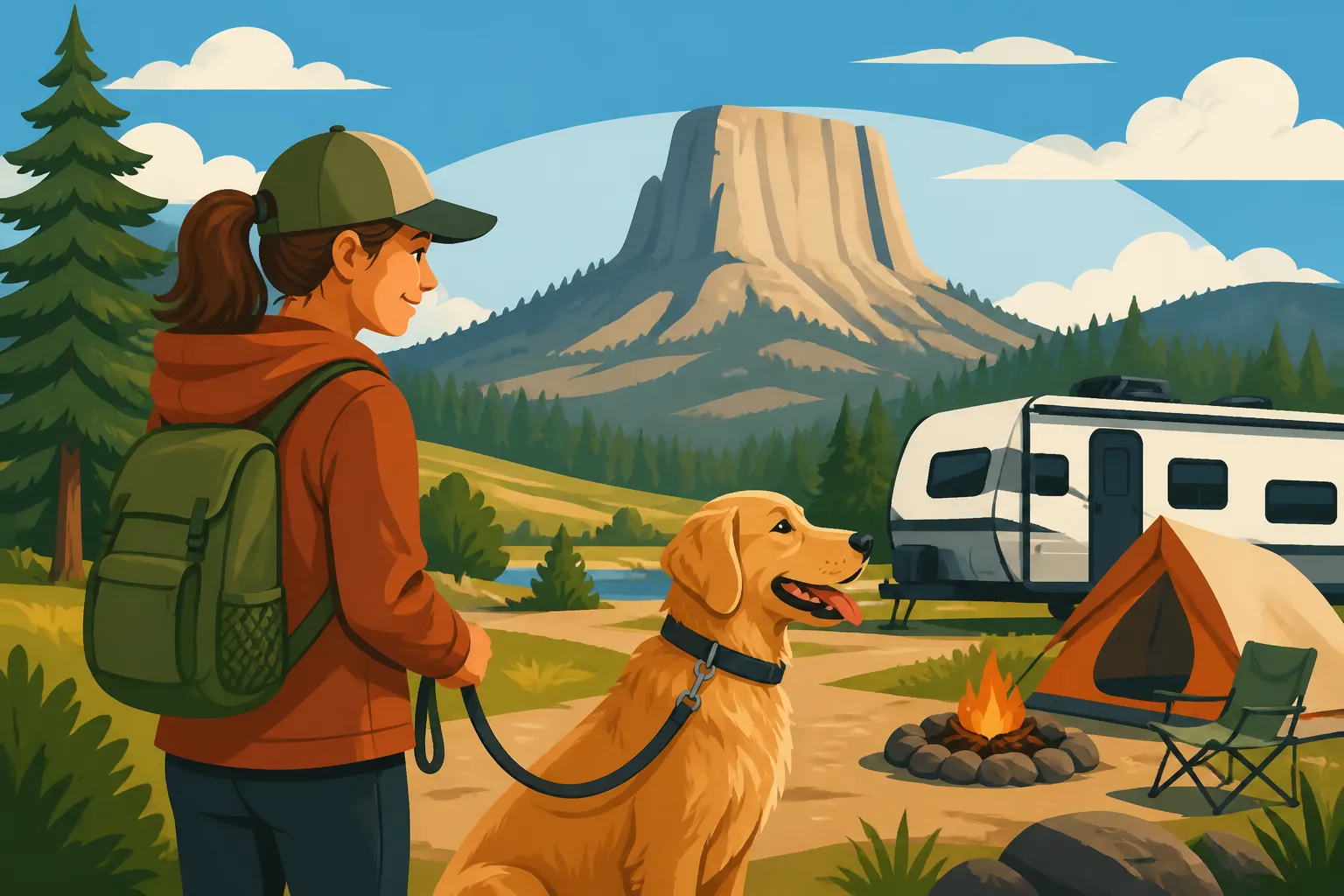
Wyoming State Parks, Historic Sites, & Trails states that dogs must be on leashes when outside of a vehicle or camping unit. That is the central requirement to build your visit around. A dog being calm, trained or close by does not replace the leash when the dog is outside the vehicle or camping unit.
For a visitor, this affects more than a walk along a campground road. It also applies when you take your dog out to stretch, settle near your campsite, or move through a shared area. Think of the leash as part of your basic equipment, rather than something you bring out only when another person or animal appears.
The requirement sets a clear baseline, but it does not answer every practical question about a particular place. Park facilities and activities can differ, and a general state-park visit page may not address every detail that matters to your dog. Before setting out, check the official information for your destination and ask the park staff or managing office about any question the published material does not resolve. Use the official website to find current contact details.
Keep official requirements separate from your own trip choices. For example, choosing a short leash, giving other visitors extra space, and skipping a busy path when your dog seems overwhelmed are useful ways to manage a visit. They are sensible planning decisions, not additions to the stated leash rule.
A leash also needs to be something you can manage securely while doing ordinary camp tasks. A dog may pull when a squirrel appears, become curious around another campsite, or move suddenly when a vehicle passes. Consider your dog’s size, strength, temperament and training when choosing equipment. Bring a backup leash if you have one, and check clasps and attachment points before leaving home.
If your dog is not comfortable being leashed for the length of an outing, reconsider what kind of visit will work. A trip built around a long stretch of movement or time outside the vehicle may be frustrating for both of you. A shorter visit, a quiet campsite or leaving the dog at home with suitable care may be a better choice than hoping the park will provide an off-leash option.
Check the Destination Before You Choose It
Not every Wyoming state park visit looks alike. Some trips focus on a campground, while others center on a day visit, a picnic or time near the water. A dog that is content relaxing beside a camper may be a good match for one plan but a poor fit for another. Start with the activities you want to do, then check whether your dog can reasonably join them under the leash requirement.
Read the official destination information with your dog in mind. Look for details about the areas you plan to visit, available facilities, seasonal operations and any posted guidance for pets. If the information does not answer a practical question—such as whether pets are permitted in a particular rental or activity area—ask the park before you rely on an assumption. For overnight stays, Pets in Wyoming State Park Cabins and Yurts: What to Ask can help you prepare questions about rental accommodations.
Make a short list of the parts of the trip that will involve your dog and the parts that will not. A walk from the vehicle to the campsite is different from an outing where you expect the dog to stay with you for hours. If your preferred activity is not suitable for a leashed dog, decide whether someone can stay with the dog, whether you can alternate activities, or whether that destination is not the right choice for this trip.
Match the outing to your dog
Consider how your dog handles ordinary situations that can arise in a public place:
- Passing unfamiliar people or dogs at close range
- Waiting calmly while you speak with someone or organize equipment
- Hearing vehicles, voices, doors, wildlife or other campground sounds
- Remaining near you while you prepare food or settle into camp
- Taking a break when the surroundings become busy
A dog does not need to be perfectly unbothered by every sound to travel well. But if a predictable part of the trip is likely to cause sustained stress or pulling, plan around that rather than expecting the dog to adjust on arrival. A shorter visit can be a useful trial before committing to a longer stay.
For a puppy, older dog or dog with a health concern, consider whether the length and conditions of the outing suit its abilities. Ask your veterinarian about health questions that depend on your dog’s condition. Do not treat a park visit as a test of endurance. The dog should be able to rest, drink and return to the vehicle or camping unit when it needs a break.
Ask before making a reservation or commitment
If you are choosing between a campsite, cabin, yurt or other rental, confirm the pet details for the exact accommodation. Do not assume that a rule for a campsite applies to a rental, or that information for one rental type applies to another. Confirm whether the dog can stay in the space with you and what conditions apply. For a broader look at places to stay, see Cabins, Yurts and Camp Shacks Across Wyoming State Parks.
If your plan depends on a dog being allowed in a certain place, verify that point before booking or traveling. A general statement that pets are welcome somewhere on park grounds does not necessarily settle questions about every building, recreation area or rental. Ask specifically about the spot or activity you intend to use, and keep the answer connected to your current trip details.
Plan Arrival and Movement Around Camp
The first part of a visit can be the most distracting for a dog. You may be navigating an unfamiliar road, finding a site, unloading gear and checking where to go next. Have the leash accessible before you arrive, rather than buried under bags. Make sure the dog is secured before opening the vehicle door, and choose a calm moment to let it out.
Once you arrive, take a moment to orient yourself before moving around. Look for nearby vehicles, other visitors and dogs, and decide where the dog can wait safely while you get organized. Keep the leash in hand or attached in a way that lets you control the dog. Avoid leaving the dog to roam around the site while you carry equipment back and forth.
If you are staying overnight, make the first outing practical rather than ambitious. Give your dog time to investigate the immediate surroundings on leash, take a break, and settle before adding more activity. New smells, unfamiliar sounds and nearby campers can be stimulating. A relaxed first walk can help you notice what the dog finds difficult before you commit to a longer route.
A leash can become tangled around chairs, tent lines, gear or other obstacles. Think through where you and the dog will sit or move, and keep the dog close enough that it does not cross through another visitor’s space. If a spot is crowded or awkward to manage, move to a less congested place when possible. Do not rely on a fixed tie-out as a substitute for active supervision or the required leash; check the destination’s official guidance before using any tethering setup. Tie-Outs and Long Leads for Dogs at Wyoming State Park Campsites covers questions to check before relying on that kind of arrangement.
Give other visitors room
Some people are uneasy around dogs, and some dogs are reactive or recovering from an illness. A polite greeting is not guaranteed to be welcome. When you see another person or animal approaching, shorten your dog’s available distance by bringing it closer, and move aside if there is room. Ask before allowing any interaction. If the other person declines, continue on without making the encounter a discussion.
A dog may look friendly while still being too excited to approach safely. Watch its body language and your own ability to hold the leash comfortably. If it is pulling, barking or fixating, create space rather than trying to make it meet the other dog. The same approach helps protect your dog from unwanted contact. You can also review A Barking Dog at a Wyoming State Park Campsite: What to Expect for ways to think through noise and neighbor concerns.
Keep the leash from stretching across a path, road or shared area where another person could trip over it. Give people room to pass. If a narrow area makes that difficult, pause in a safe place and let others go by before continuing. These small choices make shared spaces easier to use without adding to the official requirements.
Build routine into the visit
Dogs often settle more easily when the day has a recognizable rhythm. Plan opportunities for water, rest, feeding and toileting around your own activities. A dog that has been waiting in a vehicle or resting at camp may need a calm transition before joining a busy area. A dog that has been active may need quiet time rather than another outing.
Keep the dog’s food and supplies organized so you can reach them without leaving the animal unattended in an uncertain situation. If you are camping with other people, agree in advance on who is responsible for the dog during setup, meals and activities. Shared responsibility works best when one person is clearly paying attention at a time.
Do not assume that a dog can be left alone in a vehicle or camping unit under all conditions. Heat, cold, ventilation, the dog’s health and the length of time away all matter. Make a plan that keeps the dog safe and supervised. If the trip’s activities would repeatedly leave the dog without appropriate care, adjust the itinerary or make other arrangements.
Choose Activities Your Dog Can Actually Join
A state-park trip can include more than one kind of outing, and a dog may not be able to participate in every part. Before you set out, identify the activities that are genuinely dog-compatible and decide how to handle the rest. A plan that assumes the dog can accompany you everywhere can lead to rushed decisions once you arrive.
For a walk or casual exploration, keep the dog on leash and choose a route that matches its fitness and comfort. Pay attention to footing, weather and the amount of time you expect to be away from a place where the dog can rest. Do not push a dog through a difficult stretch simply because it is part of your preferred route. If the dog slows down, seems unsettled or has trouble keeping a comfortable pace, turn back or take a break.
Water access can sound appealing on a warm day, but do not assume every shoreline, swimming area or water activity is open to dogs. Check the specific destination’s information before planning around it. Dogs and Swimming Areas at Wyoming State Parks: What to Check can help identify the questions to ask. If dogs are not allowed in the area you hoped to use, keep your dog out and choose another activity rather than trying to find an unmarked alternative.
Some outings involve a building, rental, event or facility where pet access may be different from access to open park grounds. Check those details directly. If you are visiting a historic site as part of a larger trip, confirm which parts your dog can enter before arrival. For information about assistance animals, see Service Animals at Wyoming State Parks and Historic Sites. Do not assume the policies for a pet answer questions about a service animal or vice versa.
If you want to visit a place that is unsuitable for your dog, consider splitting up the visit with another adult. One person can remain with the dog while the other explores, then you can switch if conditions allow. If no one can provide suitable supervision, shorten the outing or choose a different plan. It is better to skip an activity than leave the dog in an unsafe situation or take it somewhere it cannot comfortably go.
Bring a realistic day plan
A useful itinerary leaves room for stops and changes. Avoid scheduling every part of the visit tightly, especially if your dog is unfamiliar with camping or public recreation areas. The dog may need time to settle, or you may discover that a popular area is noisier than expected. Having a backup activity prevents one mismatch from spoiling the entire trip.
Before departure, write down:
- The dog-friendly parts of the planned visit
- The places where you need to confirm pet access
- A quiet place to pause or return to the vehicle or camping unit
- Who will supervise the dog if the group separates
- What you will do if the weather or the dog’s behavior changes
This is a planning tool, not a list of official park requirements. Use it to catch assumptions before they become problems. The official destination information remains the place to check current access details and restrictions.
Pack for Leash-Based Travel
Packing for a dog at camp is not complicated, but it is easy to forget something important when the trip is organized around human gear. Keep dog supplies together so they are easy to find at arrival and during a walk. A practical kit commonly includes a well-fitting collar or harness, a leash you can control, water and a bowl, food, waste bags, a towel and any medication the dog needs.
Check the leash before leaving home. Look for damaged webbing, worn stitching, a faulty clasp or an attachment that does not suit your dog. If your dog is strong or likely to pull, choose equipment you can handle safely. A second leash can be helpful if the primary one becomes wet, dirty or damaged.
Bring enough waste bags for the outing and the campsite. Clean up after your dog promptly and dispose of waste in the appropriate place. If you are uncertain where waste belongs at a particular location, check posted guidance or ask park staff. Do not leave a bag beside a trail or campsite with the intention of collecting it later. For related planning, see Dog Waste Bags and Cleanup on Wyoming State Park Grounds.
Take water for the dog instead of assuming that a convenient source will be available exactly where you need it. Access to water and facilities can vary by destination and conditions. Check what is available before relying on it, and carry what your dog needs for the activities you have planned. A familiar bowl can also encourage a dog to drink when it is in a new place.
Pack familiar food and avoid changing the dog’s diet just before a trip. Bring any medication or health supplies the dog normally needs, and store them so they remain accessible. If the dog has a medical condition, ask your veterinarian what to consider before travel and how to recognize signs that the outing should end.
A clean-up kit can help if the dog gets muddy or wet. A towel, spare bedding and a way to keep dirty items separate from clean gear make the return to camp easier. Bring a familiar resting mat or blanket if it helps your dog settle. Familiar items do not guarantee that the dog will be relaxed, but they can make an unfamiliar sleeping area more recognizable.
Prepare for changing conditions
Wyoming weather and park conditions can change, so choose dog gear for the conditions you expect and be ready to adjust. A sunny start does not mean the rest of the day will be comfortable for your dog. Watch for signs of overheating, chilling, fatigue or distress. If your dog seems unwell, stop the activity and move to a safer, more comfortable setting.
Do not leave a dog in a vehicle simply because the air feels comfortable to you outside. A vehicle can become unsafe, and conditions can change while you are away. Plan activities so the dog is either with you in an appropriate place or cared for by a responsible person. If your itinerary makes that impossible, revise it.
If you want more detail on hot-weather precautions at camp, see Keeping Pets Cool in Summer Heat at Wyoming State Park Campsites. For a broader view of seasonal conditions and facilities, Water and Restrooms at Wyoming State Parks in Spring and Fall can help you remember that services may vary. Confirm the details for your own destination rather than treating a general seasonal pattern as a guarantee.
Keep Camp Comfortable for the Dog and the Neighbors
A campsite is both your temporary home and someone else’s nearby outdoor space. A dog that barks repeatedly, rushes toward passersby or gets underfoot can make the stay harder for neighbors and for you. Pay attention to early signs of discomfort or overstimulation, and respond before the behavior escalates.
If the dog starts reacting to movement or sound, first create distance from the trigger. Move to a quieter spot or give the dog a chance to rest. Avoid yelling or repeatedly correcting the dog from across the campsite; that can add to the commotion without solving what is causing it. If barking continues despite a change in surroundings, reconsider whether the dog is coping well with the setting.
Do not let the leash drag through another site or cross a walkway. Keep the dog close enough that it cannot approach someone’s equipment, food or pet. Ask before allowing a greeting, and do not assume a neighboring camper wants contact. A little space is often the kindest option for both animals.
A dog that is used to home routines may find a campground tiring. Sounds can continue after dark, and people may move around nearby. Bring a familiar bed or blanket, keep a steady routine and create a place where the dog can rest without being in the middle of camp activity. If the dog remains unsettled, reduce stimulation and take a break from the busiest areas.
Food, waste and campsite care
Keep the campsite tidy and manage the dog’s food and waste responsibly. Store supplies in a way that prevents spills and discourages the dog from raiding food or chewing equipment. Follow any posted instructions about food storage and trash at the location. Do not infer wildlife-storage rules from general camping advice; check the official information for the exact park and campsite.
Pick up dog waste each time and dispose of it appropriately. Leaving it behind creates an unpleasant problem for other visitors and can affect the campsite. If a waste container is not available where you are, carry the waste until you find the proper disposal point, following any official instructions that apply.
If your dog is prone to chewing, digging or getting into gear, organize the campsite before giving it room to settle. Keep tempting items out of reach and supervise the dog while it is outside. The leash requirement still applies when the dog is outside the vehicle or camping unit, and close supervision helps you manage the site without letting the dog wander into neighboring spaces.
Do not leave the dog unattended at camp unless you have confirmed that the arrangement is appropriate and can keep the dog safe. A dog may bark, become anxious, escape equipment or react to an unfamiliar person or animal. If you need to leave the campsite, decide who will stay with the dog or change the plan.
Know When to Change the Plan
A successful dog trip is not one where every activity goes ahead as scheduled. It is one where you can notice when the dog is not coping and respond before a small issue becomes a safety problem. Watch for persistent pulling, repeated barking, hiding, panting beyond what seems normal for the conditions, refusing to move, or difficulty settling. These signs have different causes, so consider the context and seek veterinary advice when health is a concern.
If a trail, shoreline or public area is too crowded, choose another option. If your dog becomes distressed by nearby dogs or people, increase distance and move to a quieter spot. If the dog is tired, end the outing instead of extending it to complete a plan. A flexible schedule can make that decision easier.
If you cannot keep control of the dog on leash, do not continue into a situation where the dog could reach other visitors, wildlife or a road. Move to a safer area and reassess. A dog that pulls hard or slips equipment may need better-fitting gear, more training or a different kind of outing before returning to a busy campground.
For some dogs, a state park visit may be more stressful than enjoyable. That can be true for dogs that are highly reactive, fearful in unfamiliar places, uncomfortable around other animals, or unable to rest in a shared setting. A quiet day trip, a less crowded time, a different destination or suitable care at home may be a better match. Choosing not to bring the dog is a reasonable way to protect its well-being.
If the dog gets loose or someone is injured, focus first on immediate safety. Keep other visitors at a distance if you can do so without creating further risk. Use the park’s official information to find current contact details and follow staff instructions. For an urgent emergency, call 911. For non-emergency questions about an incident or park expectations, use the official park contact information.
Before leaving, check that the dog is secure before opening doors or gates, gather all supplies and do a final look around the campsite. Make sure waste has been collected and that no leash, bowl, food or medication is left behind. A calm departure matters too: load the dog when you are ready to leave, not while it is loose among vehicles and people.
A Practical Pre-Trip Checklist
Use this checklist to make the plan concrete. It does not replace official rules or destination-specific information; it helps you remember the details that are easy to miss.
- Confirm the dog is suitable for the outing and the planned conditions.
- Check the official information for the specific park, activity and accommodation.
- Ask about any pet-access question that remains unclear.
- Inspect the leash, collar or harness and make sure you can manage the dog.
- Pack water, food, waste bags, medication and familiar rest supplies.
- Decide who will supervise the dog if your group splits up.
- Identify an alternative activity if the dog cannot join a planned stop.
- Plan for breaks and a prompt return to a quiet place if the dog becomes stressed.
- Review posted instructions when you arrive, and follow any site-specific direction.
- Leave the area clean and make sure the dog is secure before moving the vehicle.
If you are making a first trip, keep the initial plan modest. A shorter visit lets you learn how your dog responds to the drive, campground sounds, unfamiliar dogs and time on leash. Afterward, adjust the next outing based on what went well and what proved difficult. That is more useful than planning a complicated itinerary around assumptions.
For help with other parts of the trip, Camping in Wyoming State Parks: Passes, Campsites, Cabins and Rules covers broader camping considerations, while Park Rules Every Wyoming State Park Camper Should Know can help you identify general questions to confirm. Use the official destination information for current requirements and details that may change.
Frequently Asked Questions
Can my dog walk beside me without a leash if it is well trained?
No. The leash requirement applies when a dog is outside a vehicle or camping unit. Training is valuable for control, but it does not replace the required leash.
Can I bring my dog to every area in a Wyoming state park?
Do not assume that access is the same across all facilities and activities. Check the official information for the exact area or rental you plan to use, and confirm anything that is unclear before traveling.
Can I leave my dog at the campsite while I go somewhere else?
Plan for direct, responsible supervision rather than assuming the dog can remain alone. A dog may become distressed or disturb nearby visitors, and conditions can change. If no one can supervise the dog appropriately, adjust the activity.
What should I do if my dog gets overwhelmed?
Create distance from whatever is causing the stress, move to a quieter place and give the dog a chance to rest. If the dog does not settle or appears unwell, end the outing and seek appropriate help.
Sources
- Wyoming State Parks, Historic Sites, & Trails — Wyoming State Parks, Historic Sites, & Trails – Reservations (checked November 23, 2026)
Disclaimer
This article is for general informational purposes only and does not constitute professional advice. Laws, prices and regulations vary by location and change over time. Consult a qualified professional for guidance on your specific situation. Wyoming Camping & RV is not a government agency and is not affiliated with any government agency.