Winter Camping in Wyoming State Parks: Open Loops and Shut-Off Water
Winter camping in Wyoming state parks can be possible even when water systems are shut off and some campground areas close seasonally. The challenge is knowing what “open” means for a particular park, what services to expect, and what to confirm before driving. Use this guide to plan around winter access, water, cold-weather needs, and changing conditions.
What year-round camping does and does not tell you
“Open year-round” is useful, but it does not answer every practical question. It may describe the park’s general availability for camping while leaving open which campground areas, services, or facilities are operating during your dates. A park can be open while some loops or amenities are unavailable.
According to Wyoming State Parks, Historic Sites, & Trails, Buffalo Bill State Park is Open year round for camping and day use. That establishes year-round camping and day use at the park, but it does not identify which specific sites or services will be available for a particular visit.
Wyoming State Parks, Historic Sites, & Trails also states that, outside the listed seasonal closures, the rest of the park remains open to camping and day use from October through April. The seasonal closures matter: “open” does not mean every area is open. Check the park’s current information for the closures that apply to your plans rather than assuming a familiar summer loop is available.
Glendo has a separate year-round statement. According to Wyoming State Parks, Historic Sites, & Trails, Glendo State Park is Open year-round for day use and camping. That confirms general availability for both activities, not the winter operating status of any particular campground area or facility.
A useful way to read these statements is to separate the questions they answer:
- Is the park generally open for camping? Look for an explicit year-round camping statement.
- Which campground areas are open? Check current park information for seasonal closures and access details.
- What services are operating? Look for updates on water, restrooms, dump stations, and other amenities.
- Can you use the site you have in mind? Confirm its current availability and any conditions that affect access.
This distinction is useful beyond these parks. Some Campgrounds Close, the Park Stays Open: Partial Winter Closures explains why a park’s overall status and a campground’s seasonal status should not be treated as the same thing. And if your itinerary includes day stops rather than camping, Planning a Winter Day Visit to a Wyoming State Park can help you think through access and preparation separately from an overnight stay.
Avoid making a winter plan from a general park description alone. A park overview may describe year-round availability, while a campground page provides more specific seasonal details. If those pages do not make the status clear, contact the park using current contact information on its official website. Confirm the exact area you want to use, not just the park name.
Buffalo Bill: plan around seasonal closures and water shutoffs
Buffalo Bill is a clear example of why winter camping needs a little more checking than a warm-weather visit. The park’s general year-round status and the description of seasonal closures provide a starting point, but they are not a map of open campsites. Before you set out, check which parts of the park are open for camping during your dates and whether the access information has changed.
Do not assume that a loop you used in summer will be available in winter. Seasonal closures can affect where a camper can stay, and an open park does not automatically mean all its campground areas are in service. Check the current park page for the areas named as closed, then compare that information with any reservation or campsite details you are relying on.
If you are considering a specific site, confirm the details that could affect your arrival and setup:
- Whether the campground area is open for your planned dates.
- Whether the site is available and whether any access conditions apply.
- What services are operating in that area.
- Where to find the most current information if conditions change before you arrive.
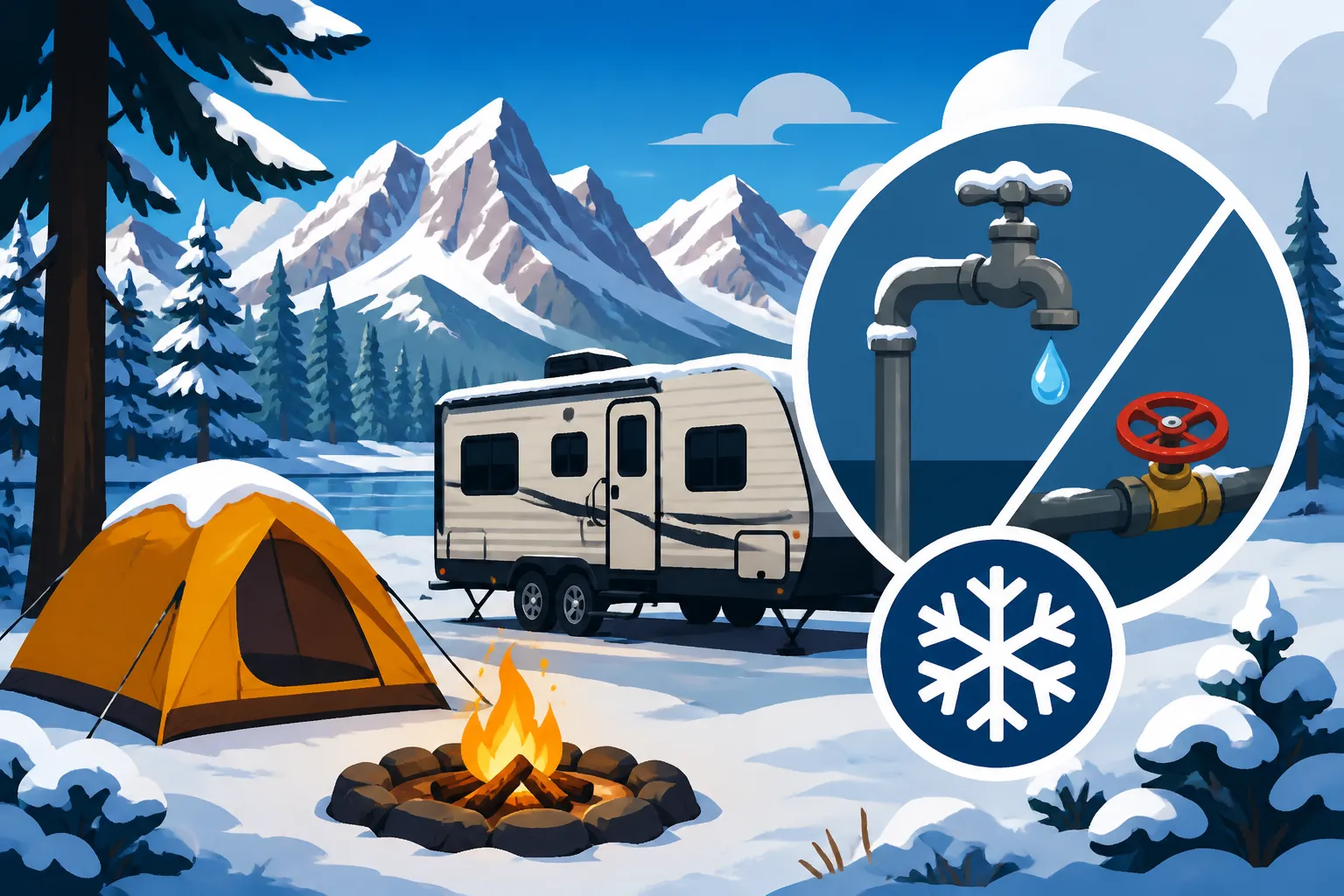
The park’s water status is especially important to plan around. Wyoming State Parks, Historic Sites, & Trails says ALL water systems turned off for the winter season at the park. Treat that as a key part of your preparation, not as a minor amenity note. Do not plan on filling containers from a park tap or using a water system at the campground unless current official information specifically says otherwise.
The shutoff also affects how you should think about facilities. A campground may remain open for camping even when water service is unavailable. Restrooms and other amenities can have separate operating details, so do not infer their status from the park’s general open-for-camping statement. Check the current park information for each service you need.
For broader seasonal planning, Water and Restrooms at Wyoming State Parks in Spring and Fall covers why water and restroom availability can vary with the season. The same planning habit helps in winter: verify services individually rather than assuming they match the campground’s status.
Buffalo Bill’s year-round camping information is helpful if you are considering an off-season stay, but it is not a promise that every site is open, that water is available, or that a particular setup will work. For more park-specific context, Year-Round Camping at Boysen State Park, Weather Permitting and Buffalo Bill’s Winter Loops: Where an RV Can Still Camp address related questions about winter operations. Check their details against the official park information for your own dates and intended campground.
Water planning when park systems are off
When a park’s water systems are shut off for winter, arrive with a plan that does not depend on campground taps. The safest planning assumption is that you need to bring the water you expect to use, while checking current park information for any updates before leaving. Do not rely on a memory of how the campground operates in summer.
Think through water needs as part of the whole trip rather than only as drinking water. You may need water for drinking, cooking, washing hands, and cleaning dishes. The amount depends on your party, trip length, meal plan, and whether you are camping in a tent, cabin, or RV. Since needs differ, estimate what your own setup requires and bring a practical reserve without assuming a park source will be available.
For RV campers, check your rig’s water system and tanks before departure. If you expect to use water from the vehicle, confirm that the system is prepared for the conditions and that you can manage the trip without relying on a campground hookup. A dry campsite and a serviced site are not interchangeable; make sure the site type and amenities match your plan. RV Hookups at Wyoming Public Campgrounds: Who Has Them, Who Doesn’t offers context on why a campground’s availability does not by itself tell you what connections it provides.
For tent campers, water planning is simpler in equipment but still worth doing carefully. Pack drinking water where it is easy to reach, and keep cooking and cleanup needs in mind. If you use a separate container for washing, keep it distinct from drinking water so you can manage both without confusion. Do not assume that a campground sink or hydrant will be usable simply because the campground itself is open.
The same principle applies to day visits. If you are counting on water during a drive or a day outside, verify what is operating and bring what you need for the outing. A site may be open for day use without every service being available. Visitor Centers at Wyoming State Parks: Help, Water and Showers can help you consider which services to check, but confirm the current status for the park you plan to visit.
Water is not the only service that needs a separate check. Ask or look for current information about restrooms, showers, dump stations, trash disposal, and any facilities you expect to use. A park-wide statement about seasonal availability may not give the operating details for each amenity. For RV-specific preparation, Winter RVing in Wyoming: Open Parks, Water Shutoffs and Dump Closures and Are Wyoming RV Dump Stations Open in Winter? cover related service questions. Verify any facility you plan to depend on rather than building your route around an unconfirmed assumption.
Keep your water plan flexible. If an official update changes what is available, adjust your supplies, campground choice, or trip plan before you arrive. If you cannot confirm a service that your setup requires, consider a different plan instead of hoping it will be available. That is especially important when cold conditions would make an unexpected stop or equipment problem harder to manage.
Glendo and other winter camping choices
Glendo’s year-round statement makes it another park to consider when planning an off-season trip. It confirms that the park is open for day use and camping throughout the year, but you still need to check the operating details that matter to your stay. Do not treat a general statement as confirmation that a specific campground, site, or amenity is open on your dates.
Start by deciding what kind of visit you want. If your priority is a particular campsite or campground area, verify that area directly. If you are flexible, check current park information for the available options and choose your setup based on what is operating. If you are visiting for the day, focus on access and the facilities you expect to use rather than assuming that camping information answers day-use questions.
The same distinction applies when comparing parks. A year-round designation answers a broad question about park availability, while seasonal notices and campground details address the practical ones. Use official park information to compare the conditions that matter to you, including where camping is permitted, what services are available, and whether the access route suits your vehicle and plans.
| Planning question | What a year-round statement tells you | What to confirm before you go |
|---|---|---|
| Is camping generally available? | The park has a year-round camping status when that is stated. | Whether the campground area you want is open for your dates. |
| Can you use a particular loop? | It does not identify every open or closed loop. | Current seasonal closures and site availability. |
| Is water available? | It does not establish water service. | Current water-system status and other facility updates. |
| Can an RV use the site? | It does not confirm hookups, access, or site suitability. | Site type, access conditions, and services that your rig requires. |
| Is day use available? | It may establish general day-use availability. | Access details and the status of facilities you expect to use. |
When comparing Buffalo Bill and Glendo, avoid trying to rank them from the year-round wording alone. The useful comparison is based on your actual needs: where you want to camp, what water plan you can support, which amenities you need, and what current closures apply. If your trip depends on a particular service, the park that can confirm that service is a better fit than one that only sounds more convenient on a general overview.
You can also plan a trip around more than one kind of overnight stay, but check each stop separately. A campground’s winter operation can differ from another campground’s, even within the same park system. Winter Camping in Wyoming State Parks: Open Loops and Shut-Off Water is the subject of this page; for further help comparing RV setups, Which Wyoming State Parks Allow RVs but Have No Hookups? can help you frame questions about services and site types. Those details still need to be checked against current official park information.
If you are choosing between a winter overnight and a day trip, be honest about what you want from the visit. An overnight stay requires a workable plan for water, sleeping, cooking, and access after dark. A day visit may be easier to adjust, but it still needs current information about access and services. Neither option should rely on an assumption that “open” means every facility is operating.
Reservations, access, and checking current conditions
A winter trip can be disrupted by a mismatch between what you booked, what you expected, and what is operating when you arrive. Reduce that risk by checking the official information close to departure and making sure the details match your exact park and campground. If you have a reservation, compare its site information with current seasonal notices rather than assuming the reservation alone answers questions about nearby services.
Use a deliberate verification routine:
- Find the official page for the park and campground you plan to use.
- Check seasonal closure information for your dates.
- Confirm that the specific site or area is available and suitable for your setup.
- Check water and other services separately.
- Review any posted access or weather-related updates before driving.
- Save the official information or current contact details so you can check again if plans change.
Do not use an old screenshot, a past visit, or an informal listing as the final word on current operations. Those can be useful planning clues, but seasonal status can change. For a more detailed look at verifying campground information, see When Park Pages Disagree: Confirming Wyoming Campsite Rules and Checking Campground Roads, Water and Restrooms Before a Wyoming Trip.
Have a backup plan that does not depend on the first campground being available. That might mean selecting another verified campground or changing the trip to a day visit. Make sure the alternative works for your vehicle and overnight setup, not just for the map. If you have no reliable water source for the plan you have chosen, change the plan before setting out.
Winter access deserves attention even if you have camped at the park before. Conditions can affect driving, parking, and campsite setup. Check the route and park updates through official information, and give yourself room to change plans if access is not suitable. Gravel Roads to Wyoming State Parks: Preparing Your Car and Wyoming State Parks After Heavy Rain: Roads and Campsites offer related preparation considerations; use current park information for conditions on your route.
For RV trips, compare the booked site with your vehicle and tow setup, and verify which services you intend to use. A site being open does not necessarily mean it has the hookup or access conditions your rig needs. For tents, think about where you can safely set up and how you will manage cold, wind, and water without relying on closed services. Will Your RV Fit a Booked Wyoming Campsite? Checks Before Arrival and Tent Camping in Snow at a Wyoming State Park cover setup questions that can help you plan.
Keep the official page easy to find during the trip. If an update appears before departure, you can respond while you still have choices. If you discover a difference at the park, follow current posted information and seek clarification through the official channel. Do not assume that an older reservation detail or third-party listing overrides a current closure notice.
Preparing your campsite for cold conditions
Cold-weather camping is less forgiving when your setup depends on a service that is unavailable or when you have no comfortable way to stay warm. Prepare for the conditions you may encounter, but avoid treating a general winter packing list as a substitute for checking the park. Your shelter, sleeping system, clothing, cooking plan, and water supply should all work without assuming a particular amenity will be open.
For tent camping, choose equipment suited to the expected conditions and secure it carefully. Wyoming weather can make an exposed campsite feel challenging; check conditions and prepare for wind as well as cold. Keep sleeping gear dry, and have a way to change into warm, dry clothing if the weather turns. Wyoming Wind at State Park Campsites: Staking Down Your Tent and Cold Summer Nights at Wyoming State Parks: Sleeping Warm cover relevant setup concerns, though your winter plan should account for the conditions forecast for your dates.
For an RV, inspect the systems you expect to use before you leave. Consider how you will provide water, manage waste, and keep the living space comfortable if campground services are unavailable. Check the vehicle and its equipment for the conditions on your route, too. If your plan depends on a hookup, dump station, or fill point, confirm that it is available rather than inferring its status from the park’s general camping information.
Think through your arrival and departure as well as the overnight itself. Have essential gear accessible without unpacking everything, and know what you will do if the site you planned to use is closed or unsuitable. A backup sleeping option or alternate destination is not a substitute for checking access, but it can make a change of plan easier.
For cooking, choose a method that fits your equipment and current site conditions. Do not assume a particular grill, fire ring, or other cooking facility is available at a winter campsite. Check applicable park information before relying on a facility, and carry a backup approach that does not require it. Fire conditions and restrictions can change, so check the relevant official information before you leave and again when you arrive. Fire Rings and Grills at Wyoming State Park Campsites, Explained and When Can a Superintendent Stop Campfires at a Wyoming State Park? provide more context on checking fire-related rules.
Plan meals and cleanup with limited water in mind. Favor a routine that keeps washing manageable, and store food and supplies so they remain organized and protected. Do not dispose of dishwater or other waste based on assumptions about summer practice; check the campground’s current directions. Dumping Dishwater at a Wyoming State Park Campsite: What to Check and Breaking Camp at a Wyoming State Park: A Cleanup Checklist can help you prepare for departure and cleanup.
If you are new to winter camping, a shorter, flexible trip may be easier to manage than a complicated itinerary. That does not guarantee mild conditions, but it reduces the number of assumptions your plan must depend on. Be willing to postpone or choose a different kind of visit if the conditions, water plan, or access information do not support a safe and comfortable stay.
A practical planning checklist for a winter visit
Start with the purpose of the trip. Decide whether you want to camp, visit for the day, or keep both options open. Then choose a park based on confirmed access and services rather than its general reputation or a past summer visit. Buffalo Bill and Glendo have year-round statements, but the details of the particular campground and service still matter.
Before leaving, review the official park information and check for seasonal closures. For Buffalo Bill, remember that the stated open area is qualified by listed seasonal closures, and that the park’s water systems are off for the winter season. For Glendo, year-round day use and camping do not by themselves establish what is operating at a particular campground or site. Confirm the details for the park you select.
Match your supplies to what you can verify. Bring the water your plan requires if no park water service is available, and make sure your cooking, sleeping, and cleanup plans do not depend on an unconfirmed facility. RV campers should confirm the specific service and site requirements of their rig. Tent campers should plan shelter and sleeping gear for the expected conditions.
Check the route and arrival plan. Look at current access information and make sure you know what to do if the planned campground area is closed or conditions change. Keep a backup destination or day-use alternative in mind, but verify that option too. Avoid setting out with a fallback that depends on the same unavailable service or uncertain access.
When you arrive, read current signs and follow posted directions. Recheck official information if something differs from what you expected. If you need clarification, use current contact details from the park’s official website. Do not rely on another camper’s recollection as confirmation of the rules or services for your own site.
Use this checklist as a final review:
- Confirm the park’s current status and the specific campground area you intend to use.
- Check seasonal closures for your dates.
- Verify the site’s availability and suitability for your tent or RV.
- Confirm water, restroom, and other services separately.
- Pack for cold and changing conditions.
- Carry a backup plan if access or services differ from expectations.
- Check fire information before leaving and again when you arrive.
- Follow current posted directions once at the park.
For a wider view of the season, When Wyoming Campgrounds Open and Close for the Season can help with seasonal planning, and Winter Camping in Wyoming State Parks: Open Loops and Shut-Off Water addresses the central issue: year-round availability does not necessarily mean every loop or service is operating. Use official park information to turn that general starting point into a plan for your specific trip.
Frequently Asked Questions
Does year-round camping mean every campground loop is open?
No. A park may be open while some campground areas are seasonally closed. Check the current official information for the specific area and dates you have in mind.
Can you count on water at Buffalo Bill in winter?
No. Wyoming State Parks, Historic Sites, & Trails reports that the park’s water systems are turned off for the winter season. Plan for your water needs without relying on a park tap, and check for current updates.
Is Glendo available for winter camping?
Wyoming State Parks, Historic Sites, & Trails describes Glendo as open for day use and camping year-round. Confirm the status of the campground area, site, and services you plan to use before departure.
What should you check before driving to a winter campsite?
Confirm current seasonal closures, site availability, access information, water status, and any other service your setup requires. Recheck official information close to departure and follow posted directions when you arrive.
Sources
- Wyoming State Parks, Historic Sites, & Trails — Wyoming State Parks, Historic Sites, & Trails – Buffalo Bill State Park (checked November 23, 2026)
- Wyoming State Parks, Historic Sites, & Trails — Wyoming State Parks, Historic Sites, & Trails – Glendo State Park (checked November 23, 2026)
Disclaimer
This article is for general informational purposes only and does not constitute professional advice. Laws, prices and regulations vary by location and change over time. Consult a qualified professional for guidance on your specific situation. Wyoming Camping & RV is not a government agency and is not affiliated with any government agency.