Dumping Dishwater at a Wyoming State Park Campsite: What to Check
After a meal at camp, dishwater can seem like a small problem: pour it out, rinse the basin and move on. But the right place to dispose of it can depend on the campground’s facilities and posted rules. Before you wash up, check what the site provides, what the park says about wastewater and what to do if the usual option is unavailable.
Why dishwater disposal needs a quick check
Dishwater is more than clean water. It can contain food scraps, grease, soap and residue from cookware. Where it goes matters for campground cleanliness, wildlife and the next camper’s use of the site. The practical challenge is that a Wyoming state park campsite may not have the same disposal setup as another campground, so a habit that worked elsewhere should not be treated as a rule here.
Start by distinguishing dishwater from other kinds of wastewater. Water from washing plates and pans is often called gray water, but campground instructions may use different terms or address specific sources of water separately. Don’t assume that a direction about drinking water, sinks, showers, RV tanks or a dump station also answers where to empty a dish basin. If the posted wording is unclear, ask park staff or use the official park information to confirm the campsite’s instructions.
This matters whether you are in a tent, a camper van or an RV. A tent camper may carry dishwater in a basin to a designated facility, while someone in an RV may be thinking about a built-in tank or campground dump station. Those situations are related, but the available equipment and instructions can differ. A dump station is not automatically the right place for every kind of wastewater; check what the park allows at that facility.
The most reliable approach is to verify the disposal method for the exact campground and site before washing up. Use the park’s official information, then check signs at the campground when you arrive. If the written instructions and the facilities you see do not seem to match, pause and ask a park representative instead of guessing.
A quick check can also prevent unnecessary mess. Pouring water onto a campsite pad, near a neighboring site or beside a shared facility can leave food residue, attract animals or create an unpleasant area for others. Those are practical reasons to handle wash water carefully; they are not a substitute for the park’s specific instructions.
If your trip involves several campgrounds, don’t assume one answer covers the whole route. Rules and facilities may vary from site to site. Build a short disposal check into your arrival routine, along with confirming water availability and the location of restrooms. The broader Park Rules Every Wyoming State Park Camper Should Know can help you prepare, but the instructions posted for your specific campground should guide what you do there.
Find out what disposal options the campground provides
Before choosing a method, identify what is actually available at your campsite. Some sites may have a designated place or facility for wastewater; others may have no obvious disposal point nearby. A campground map, official park information, posted signs and staff can help you determine which option applies.
Do not read “there is a sink,” “there is a water hydrant” or “there is a dump station” as permission to empty dishwater there. Those facilities may have a specific purpose, and the campground’s instructions determine their use. In particular, a drinking-water hydrant is not necessarily a dishwashing station, and a dump station may have instructions that apply to certain tanks or types of waste rather than wash water.
Use the table below as a set of questions to resolve, not as a list of universal rules. If an option is not explicitly identified for dishwater, confirm before using it.
| Option you notice | What to check before using it |
|---|---|
| A designated wastewater disposal point | Does the sign or official campground information identify it for dishwater or gray water? |
| A campground sink or wash area | Is dishwashing permitted there, and does the posted direction say where the wastewater should go? |
| An RV dump station | Do the instructions cover dishwater, or only particular tanks and waste? Ask if the wording is unclear. |
| A water hydrant or drinking-water spigot | Is it only for filling containers, or is there a separate washing area? Don’t use it as a disposal point without confirmation. |
| A campsite drain or grate | Is it meant for dishwater, and are there instructions about food scraps, soap or other residue? |
| No visible facility | What does the campground direct campers to do? Check with staff rather than choosing a nearby patch of ground. |
The key is to verify the connection between the facility and the task. A place that handles some wastewater does not necessarily handle dishwater. Likewise, a facility designed for washing may not tell you how to dispose of the resulting water. Look for wording that addresses both what you are doing and where the water should go.
If you are using a self-contained RV, check the campground information for details about available services and instructions for the disposal facility. The article What to Know Before Emptying RV Black and Gray Tanks in Wyoming covers tank-related planning, but dishwashing water at a campsite still deserves its own check. Don’t assume that guidance for a tank answers every question about water from a basin.
When facilities are shared, consider other campers as well. Keep washing and disposal within the area the park has provided, avoid blocking access and follow any posted directions about cleaning the space afterward. A shared sink or service area may have limited room, so a small basin can make it easier to contain water while you move between the campsite and the designated location.
Check the exact wording, not just the general idea
Campground instructions can be brief, and small differences in wording can matter. “Use the wash station” does not necessarily explain where to pour the basin afterward. “Keep food scraps out of drains” does not, by itself, tell you whether the water can be emptied at that location. If a sign gives only part of the answer, look for a nearby notice or ask staff to clarify.
Check the following before washing dishes:
- Which water is covered: Does the direction specifically include dishwater, or does it address another source of wastewater?
- Where disposal is allowed: Does the park identify a particular sink, drain, station or other facility?
- What preparation is required: Are there instructions about removing food particles or handling grease before disposal?
- Whether the direction applies to your site: Is the instruction for your campground or a different area of the park?
- What to do if the facility is closed or unavailable: Is there an alternate method, or should you wait and ask staff?
- Whether there are additional signs: Check at the facility itself, not only at the campsite.
Treat a sign at a facility as more useful than an assumption based on its appearance. A drain may look suitable for wash water, but its intended use is not always obvious. If the sign identifies a purpose that does not include dishwater, do not infer permission. If it is missing, damaged or hard to interpret, use the official park information or ask park staff.
When preparing for a trip, check the park’s official website for the specific campground and any sanitation or facility guidance. If that information is not clear, contact the park using current details from its official website. Information for a different campground, an older trip or a general camping discussion may not apply to your site.
This is especially helpful when planning a stay outside the busiest season. Facilities and services can vary with seasonal operations, and a facility shown on a general map may not be available during your visit. For context on seasonal changes, see Water and Restrooms at Wyoming State Parks in Spring and Fall and Why Services Vary With Seasonal Staffing at Wyoming State Parks. Check current campground details rather than relying on a past visit.
Wash dishes in a way that makes disposal easier
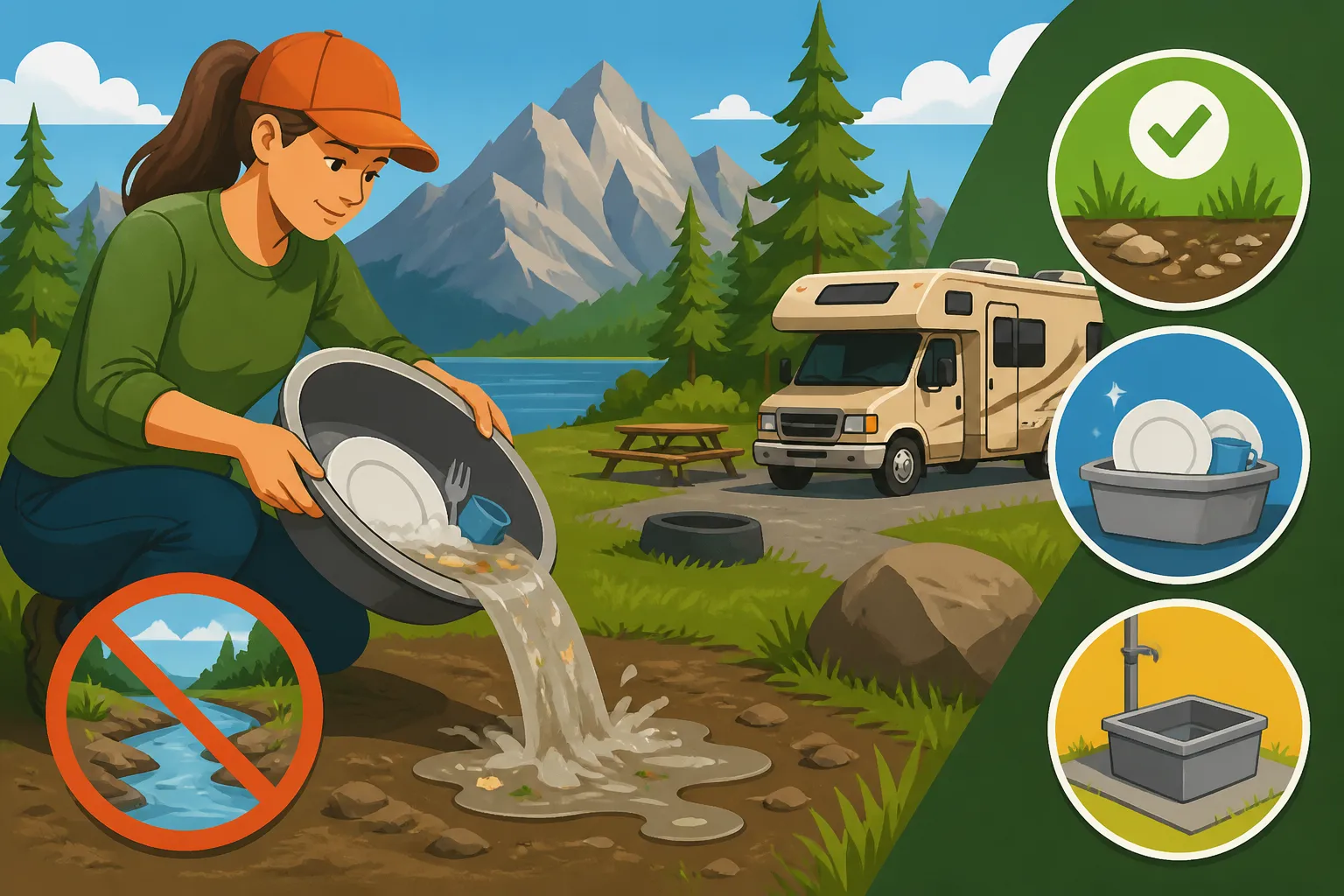
Once you know the approved disposal method, a little preparation can make cleanup simpler. Use a basin rather than letting water run continuously, and scrape leftover food from dishes before washing. Keep food solids out of wash water and sinks unless the campground’s instructions say otherwise. This reduces residue and makes it easier to carry and dispose of the water without spilling.
A basic routine looks like this:
- Check the campground’s instructions. Confirm the disposal location and any special directions before starting.
- Remove leftover food from plates and cookware. Put scraps where the park directs campers to put food waste. Do not assume a drain, fire ring or surrounding ground is an acceptable destination.
- Use only as much water as needed. A basin helps contain the water and makes it easier to transport.
- Wash dishes at the designated place or campsite area. Follow the posted instructions about where washing is allowed.
- Carry the used water to the confirmed disposal point. Avoid pouring it somewhere simply because it is nearby.
- Leave the area clean. Clear away any food residue and follow the facility’s cleanup directions.
If you are not sure whether you can wash dishes at your campsite, ask. Some campers may prefer washing at the site to avoid carrying a basin, but convenience does not determine what the campground permits. Conversely, a campground may offer a shared washing area that is intended for this purpose. Confirm the setup rather than presuming one arrangement is universal.
Be thoughtful about soap and grease. Use only what you need, and do not pour grease or oily residue into a drain unless the park specifically instructs you to do so. If cookware has a greasy film, wipe it out with a paper towel or other appropriate material and dispose of that material according to the campground’s directions. This is a useful cleanup practice, not a claim that every park has identical waste rules.
Keep the basin secure while carrying it. A wide, shallow container can slosh if it is overfilled, especially when walking across uneven ground or in wind. Carrying smaller amounts may take an extra trip, but it can reduce spills and keep wash water away from paths, neighboring sites and shared recreation areas.
If you camp in an RV, separate the practical question of where dishwater goes from the question of what a tank can hold. Check the RV’s equipment and the campground’s instructions, and use only a disposal point designated for the relevant waste. Details about dump-station access and services are covered in Which Wyoming State Parks and Historic Sites Have Dump Stations?. A listing for a dump station does not by itself confirm that it accepts dishwater from a portable basin.
If you camp with children, make the disposal destination part of the cleanup routine. A child who helps wash dishes may not know that water should not be poured onto the ground or into an unmarked drain. Show them the confirmed facility and have an adult carry or supervise the basin. This keeps the routine predictable and reduces accidental spills.
A practical arrival and departure checklist
Dishwater disposal is easiest to handle before the first meal, not when the basin is full and everyone is ready to leave the table. During check-in or the first walk around the campground, identify the facilities and read the signs. If anything is unclear, ask before you need the answer.
Use this sequence:
- Open the official information for the correct park and campground. Look for facility details and directions about dishwashing or wastewater.
- At arrival, check the actual campsite and nearby facilities. Confirm that the facility shown in the information is present and available.
- Read signs at the point of use. Look for specific directions about washing, disposing of water and cleaning up.
- Ask park staff if the instructions leave room for interpretation. Describe the water you have and the facility you are considering.
- Keep the answer with your campsite notes. If the trip includes multiple campgrounds, repeat the check at each one.
- Follow the posted directions during cleanup. If a facility becomes unavailable, do not switch to an unapproved location without confirming an alternative.
If you arrive late, do not treat the absence of staff as permission to choose a disposal point. Check posted signs and official campground information. If those do not resolve the question, contain the water safely until you can confirm the correct method, rather than emptying it somewhere uncertain. Be mindful that storing a basin overnight can create a spill risk; keep it stable and away from foot traffic.
Before leaving, check the area where you washed and the route you used to carry the basin. Pick up food particles and any items you used for cleanup, and leave shared facilities as the park directs. For a broader end-of-stay routine, Breaking Camp at a Wyoming State Park: A Cleanup Checklist can help with campsite cleanup beyond dishes.
If your party is arriving in separate vehicles or friends are visiting, make sure everyone knows the disposal method. One person may have checked the rules while another assumes a nearby drain is suitable. A short conversation avoids inconsistent practices, especially at a site with shared facilities. For related planning about visitors, see A Friend’s Car at Your Wyoming State Park Campsite: Who Pays? and Evening Guests at a Wyoming State Park Campsite: What to Check.
For a first visit, include this task in the same planning pass as campsite type, water and restroom availability. First Camping Weekend at a Wyoming State Park: A Planning Checklist offers a wider preparation framework. If you are choosing between campgrounds, Picking a Wyoming State Park by Campsite, Cabin and Hookup Type can help you compare the kind of setup you want, but confirm the dishwater instructions for the specific campground you select.
Frequently Asked Questions
Can I pour dishwater onto the ground at a Wyoming state park campsite?
Do not assume that ground disposal is allowed. Check the park’s instructions for your campground and ask staff if the approved method is unclear. Use a designated option only when the park identifies it for dishwater.
Can I use an RV dump station for dishwater?
A dump station’s presence does not automatically mean it accepts dishwater from a basin. Read its posted directions and confirm whether they cover dishwater. Use the facility only as directed.
Can I wash dishes at a drinking-water hydrant?
Do not assume a hydrant is a dishwashing or wastewater facility. Check for a designated wash area and follow posted instructions. If the campground does not make the intended use clear, ask park staff.
What if the campground has no visible dishwater facility?
Check the official campground information and ask park staff for the correct method. Avoid choosing a drain or an area of ground based on appearance alone.
Should I check again if I have camped at the park before?
Yes. Confirm the instructions and facility availability for the campground and visit you are planning. A previous trip may have involved a different site, facility setup or seasonal operation.
Disclaimer
This article is for general informational purposes only and does not constitute professional advice. Laws, prices and regulations vary by location and change over time. Consult a qualified professional for guidance on your specific situation. Wyoming Camping & RV is not a government agency and is not affiliated with any government agency.