Evening Guests at a Wyoming State Park Campsite: What to Check
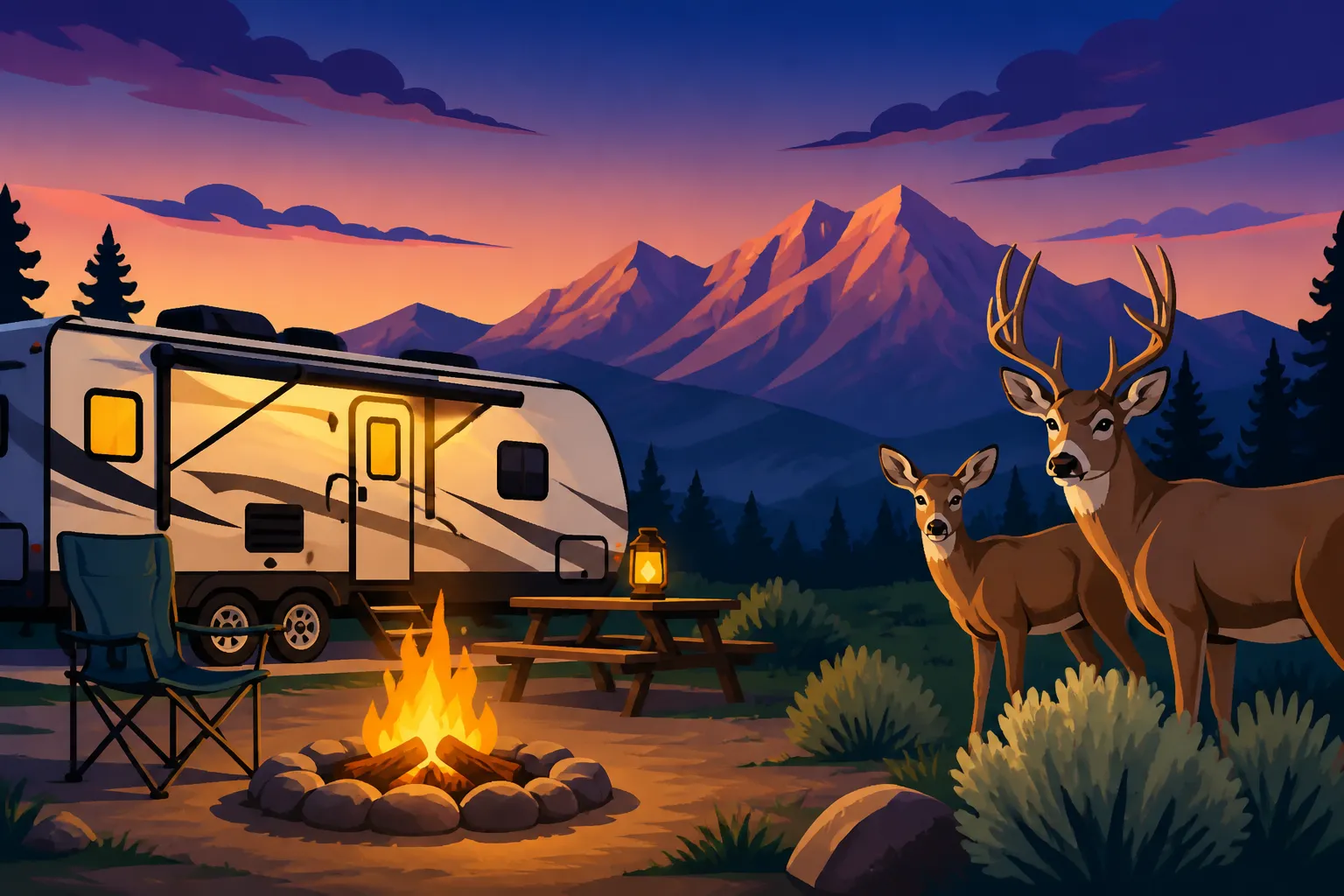
An evening visitor can turn a quiet Wyoming State Park campsite into a confusing arrival if nobody has checked the rules. Before inviting someone over, confirm how the park handles guest entry, extra vehicles, parking, quiet hours and overnight stays. A quick check with the park or its official reservation information can prevent a gate problem or an uncomfortable conversation at camp.
Start by defining the visit
“Evening guest” can mean a few different things: someone stopping by for dinner, a friend arriving after dark, a relative staying late, or an extra person sleeping at the campsite. Those are not necessarily treated alike. Before making plans, decide which situation you mean and check the rules for that specific visit.
The first distinction is whether the guest will leave that night. A visitor who comes for a meal and drives away is different from someone who spends the night in a tent, vehicle or RV. An overnight visitor may affect the number of people using a site, the number of vehicles, or how the campsite is assigned. Don’t assume that “just one night” makes the visit equivalent to a daytime stop.
The second distinction is how the guest enters. A person riding in with the registered camper may face different practical questions from someone driving a separate vehicle. That separate vehicle could need to meet park entry or parking requirements, even if the guest is not staying overnight. Check the current details before the visitor sets out, rather than relying on what happened at another park or on a previous trip.
It helps to describe the plan precisely when checking:
- Which Wyoming State Park and campground are involved?
- Is the guest arriving on foot, as a passenger, or in a separate vehicle?
- What time do they expect to arrive?
- Will they leave that night or sleep at the campsite?
- Will they use shared facilities or park elsewhere?
- Is the campsite part of a reservation with a defined party or vehicle count?
Those details help you get an answer that matches your situation. The park’s information may distinguish between the rules for a campsite, a day-use area, a visitor parking area and a cabin or other rental. A general answer about “guests” may not cover all of them.
If your party is already close to a capacity limit or has multiple vehicles, check before extending the invitation. A campsite reservation does not automatically answer every question about later visitors. For more background on what an ordinary site includes and how the fee is structured, see What Comes With an Ordinary Wyoming State Park Campsite? and Is the Camping Fee Charged Per Site or Per Vehicle?.
The safest baseline is simple: treat an evening visit as a plan to verify, not as an automatic privilege attached to a campsite. Confirm the park’s current guest and vehicle requirements, then share the relevant details with the visitor.
Check entry, vehicle and parking requirements
A guest arriving by car creates two separate questions: whether the person may enter the park, and where the vehicle may be parked. The answers may depend on the specific park, the time, the guest’s reason for visiting and the entry method. Check each point rather than assuming that a campsite reservation covers a visitor’s vehicle.
A windshield sticker, daily entry permit or camping fee may apply differently to different vehicles and visits. Don’t assume that the guest’s car is covered by the camping party’s permit, or that a passenger can enter without any separate requirement. Confirm what applies to the visitor’s vehicle and how the park expects payment or permit display to work. The articles A Friend’s Car at Your Wyoming State Park Campsite: Who Pays? and Riding In on a Motorcycle: The Per-Vehicle Rule at Wyoming State Parks can help frame the vehicle question.
Parking is just as important as entry. A campground road, a site pad, a designated parking space and an overflow area are not interchangeable. A visitor should not block a road, another campsite, an access route or a space reserved for a different purpose. Ask where an evening guest should leave a vehicle and whether the visitor can park near the campsite at the planned arrival time.
Use this checklist when confirming vehicle details:
| Question | What to confirm |
|---|---|
| Does the guest need a separate entry permit or fee? | Ask how the rule applies to the guest’s vehicle and visit. |
| Where can the vehicle park? | Confirm the appropriate visitor or campground parking area. |
| Is parking available near the campsite after dark? | Check access and parking arrangements for the expected arrival time. |
| Can the guest leave the vehicle overnight? | Ask directly if the visit may run late or change into an overnight stay. |
| Is there room for another vehicle at the site? | Check the site details and park rules rather than relying on the campsite’s appearance. |
| What if the entrance or fee booth is unattended? | Confirm the official procedure for that location and time. |
If the guest plans to arrive after a booth or staffed area may be closed, don’t improvise. Ask the park what the visitor should do on arrival, where to pay or display any required permit, and whether access is available for that kind of visit. A process used at one campground may not apply at another. For related planning, see When Are Wyoming State Park Fee Booths Staffed? and Self-Pay Kiosks at Wyoming State Parks: Cash, Check or Card.
A guest should also know where to go before driving in. Send the campground name, campsite location and the approved parking instructions, if the park provides them. If cell service may be unreliable, agree on a meeting point or another way to communicate before the visitor leaves. No Cell Signal at a Wyoming State Park: Planning Ahead covers why it is useful to make those arrangements early.
Avoid telling a guest to “just follow the road until they see the site.” That can lead to a late-night wrong turn, a vehicle parked in an unsuitable place or a disturbance to other campers. Give clear directions using information from the park’s official map or campground instructions. For large parks with several loops, Navigating a Large Wyoming State Park With Many Campgrounds offers useful planning context.
Confirm whether an overnight stay changes the plan
A visitor who stays overnight may be treated differently from someone who leaves after dinner. Before offering a tent spot or space in an RV, check the site’s occupancy and vehicle details, the park’s rules for additional people, and any conditions attached to the reservation. Don’t assume the registered camper can add people or vehicles without checking.
Be clear about where the guest would sleep. A tent placed beside an RV, a person sleeping in a vehicle, and an extra person sharing a cabin are different arrangements. The official information for the specific campsite or rental is the place to confirm what is allowed. If a friend is bringing a tent, look at the site’s setup details and check whether there is room and permission for that equipment. How Many Tents and Vehicles Fit on One Wyoming State Park Campsite? and Placing Tents, Canopies and Trailers on a State Park Pad in Wyoming are relevant when the guest’s setup may take up additional space.
The reservation holder should be the person who checks. A guest’s interpretation of a text message or a past visit is not a substitute for current conditions. If the stay is booked through an official reservation system, review the reservation and the park’s published information together. If a detail remains unclear, use the park’s official website to find current contact details and ask the park.
Consider these practical questions before saying yes to an overnight visit:
- Is the guest allowed to join the party at this site?
- Does the visit change the number of occupants or vehicles the park needs to account for?
- Is there a place for the guest to sleep without extending beyond the permitted campsite area?
- Does the guest need to be added to or reflected in the reservation?
- If the guest arrives separately, what entry and parking steps apply?
- Is there a rule about leaving a vehicle or equipment at the site after the registered party departs?
Keep the answer specific to the site and arrangement. “There’s room” is a judgment about physical space, not confirmation that the setup complies with park rules. A campsite can look spacious while still having requirements about where equipment or vehicles may go.
If a visitor unexpectedly decides to stay, pause before setting up another sleeping area or leaving a vehicle overnight. Check the rules and, if necessary, contact the park through its official channels. The same applies if weather, a delayed arrival or a change in transportation turns a planned short visit into a late departure.
For an evening guest at a cabin, yurt or other rental, check the rental’s guest and occupancy terms separately. A campsite rule may not apply to a rental, and a rental reservation may have its own limits. Day Guests at Your Wyoming State Park Cabin: Who Pays? and How Many Guests a Wyoming State Park Cabin Holds, and How to Check can help identify what to ask.
Plan for quiet, shared facilities and changing conditions
Even a permitted guest can create problems if the visit disrupts nearby campers. Arrivals after dark call for a quieter plan: keep headlights from sweeping across neighboring sites where possible, unload only what is needed, and avoid prolonged conversations beside other campers’ sleeping areas. These are considerate practices, not a substitute for checking the park’s posted rules.
Confirm the applicable quiet-hours information with the park rather than relying on a remembered schedule. The time and how a rule is applied can vary by location or season. If a visitor expects to arrive late, tell them in advance to keep voices, doors, music and vehicle activity low. Quiet Hours at Wyoming State Park Campgrounds: How to Confirm Them explains what to verify.
Shared facilities need the same thought. Ask whether the guest may use restrooms, showers, water points or other campground facilities, and whether any access conditions apply. A visitor who is welcome at the campsite may still need to follow separate facility or parking directions. Do not direct guests to use a facility, enter a loop or cross a closed area unless the park’s information supports that plan.
The campsite should remain a campsite, not a gathering area that spills into neighboring spaces. Keep chairs, food, coolers and other belongings within the assigned area, and don’t use an empty-looking adjacent pad without permission. A visitor’s car should not occupy a neighboring site simply because it appears vacant. For more on respectful use of space, see Campsite Etiquette at Wyoming State Parks: Lights, Space and Neighbors.
Food and cooking are also worth planning. If the guest is bringing dinner, decide where it will be prepared and how leftovers, trash and cooking items will be handled. Follow the park’s posted rules for food, waste and cooking equipment. Don’t leave food or dishes out while the group visits another area or goes to sleep. Wyoming Clean-Camp Guide: Storing Food, Trash, Toiletries and Cookware and Trash at a Wyoming State Park Campsite: Where It Goes and Why offer related preparation advice.
Weather and changing access can affect a late arrival. A storm, road issue, seasonal closure or unexpected campground condition may change where a guest can go. Check the park’s official information before the visitor departs, especially if the route or campground has multiple access points. If the plan changes at the last minute, don’t assume the original parking or entry instructions still fit.
Fire plans need a separate check. A fire ring or grill at a campsite does not, by itself, establish what is allowed on a particular date. Restrictions can change, so check the applicable agency’s current fire information before leaving and again when you arrive. If a fire is not permitted, plan an alternative meal or gathering without treating a stove, grill or other device as automatically allowed. When Can a Superintendent Stop Campfires at a Wyoming State Park? has more on checking this question.
A useful evening plan includes a clear arrival time, a quiet route to the site, the correct parking location, a backup way to communicate and a firm understanding of whether the visitor is leaving or staying. That is more reliable than expecting a guest to sort out details while standing at an entrance in the dark.
Make a quick check before inviting someone over
Use this sequence to avoid missing a practical detail:
- Identify the exact place. Check the park, campground, loop and campsite or rental, not just the park name.
- Describe the visit accurately. Say whether the guest is coming by car, arriving after dark, using facilities, or staying overnight.
- Verify entry and payment. Ask whether the separate vehicle needs a permit or fee and how the guest should handle it.
- Confirm parking and access. Find out where the vehicle can go and what to do if the normal staffed point is closed.
- Check occupancy and setup. If the guest will sleep at camp or bring equipment, confirm that the site and reservation allow the arrangement.
- Review quiet and facility rules. Share the relevant instructions with the visitor before they drive in.
- Recheck close to arrival. Look for current park information and any updated access or fire notices.
If the answer is unclear, describe the details again rather than asking only, “Can guests visit?” A precise question helps distinguish a quick meal from an overnight stay and an arriving passenger from a second vehicle. Keep a note of the answer and pass the necessary instructions to the guest.
When no one can confirm the plan before departure, choose the lower-impact option: have the visitor meet outside the campground or postpone the visit until you can verify access and parking. Do not ask a guest to enter a restricted area, use another site or leave a vehicle where the rules are uncertain.
It is also sensible to set expectations with the visitor. Tell them that the invitation depends on the park’s requirements, that they must use the approved parking area, and that they should keep the arrival quiet. If the visit becomes an overnight stay, check again before changing the arrangement. This protects the guest from a frustrating arrival and helps keep the campsite comfortable for neighbors.
For a broader review of responsibilities that apply to campers, Park Rules Every Wyoming State Park Camper Should Know is a useful companion. If your plans include extra people across several cars, Pricing Wyoming State Park Permits for Several Family Cars can help you identify the vehicle questions to check.
Frequently Asked Questions
Can a friend visit a Wyoming State Park campsite in the evening?
Check with the specific park before inviting them. Confirm the guest’s entry requirements, vehicle parking, arrival access and whether the visit is treated differently if the person stays overnight.
Does my campsite reservation cover a guest’s car?
Do not assume it does. Ask whether a separate vehicle needs its own entry permit or fee, and where it may park. The answer can depend on the visit and the park’s current instructions.
Can an evening visitor stay overnight?
Confirm the site’s occupancy, reservation and vehicle requirements before offering a place to sleep. A short visit and an overnight stay may be handled differently.
What if the guest arrives after the entrance is unattended?
Ask the park what procedure applies at that location and time. Confirm how to enter, handle any required payment or permit, and park without blocking access.
Should guests follow campground quiet hours?
Yes. Check the park’s current quiet-hours information and tell visitors to arrive and settle in quietly, especially if they will be driving through the campground after dark.
Disclaimer
This article is for general informational purposes only and does not constitute professional advice. Laws, prices and regulations vary by location and change over time. Consult a qualified professional for guidance on your specific situation. Wyoming Camping & RV is not a government agency and is not affiliated with any government agency.