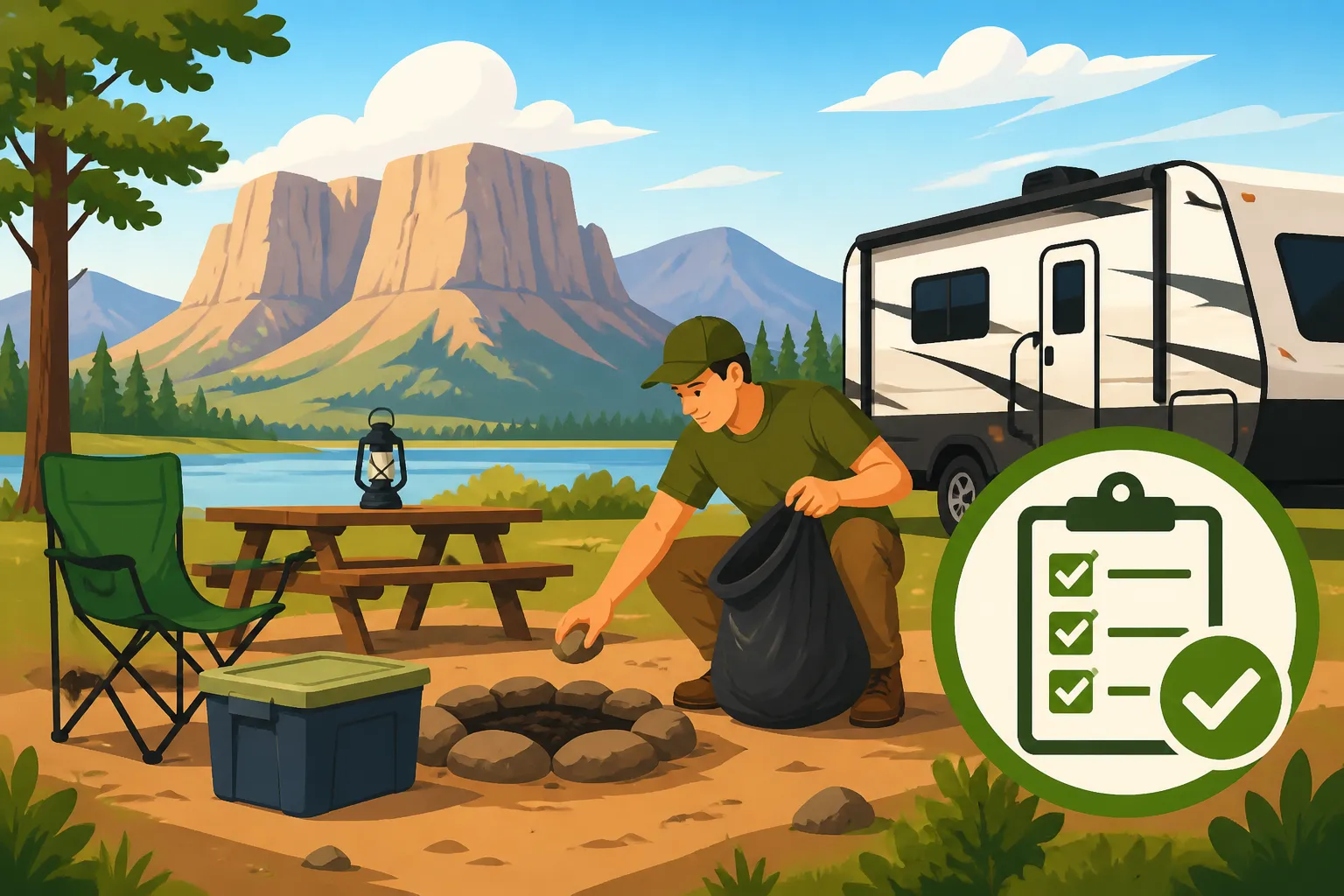
Breaking Camp at a Wyoming State Park: A Cleanup Checklist
Leaving a Wyoming state park campsite in good shape takes more than tossing a few wrappers. Food, dishes, tent gear, hookups, fire areas, and overlooked trash can all complicate departure. This checklist helps you work through the cleanup in a useful order, protect your equipment, and finish with a careful look around—while keeping the park’s posted instructions in charge.
Why a deliberate cleanup matters
Breaking camp is often the moment when small messes are easiest to miss. A wrapper may have blown beneath a picnic table, a food container may still be in the cooler, or a tent stake may be hiding in the grass. An organized walk-through reduces the chance of leaving something behind and makes it easier to spot damage or a problem that needs attention.
It also helps separate general good practice from the rules for a particular site. Wyoming state parks can have different facilities and camping arrangements. Your site may have a table, fire ring, water access, electrical service, or none of those. Rental accommodations may have their own checkout instructions. Follow the directions posted at your site and the instructions provided for your reservation; use this checklist to catch the ordinary details that are easy to overlook.
The Wyoming Game & Fish Department says: Dispose of all garbage properly and pack out any remaining garbage.
That instruction is a useful starting point for any cleanup. Don’t leave a bag beside a full bin, assume another camper will collect loose items, or leave food waste behind. If a trash container is full or unavailable, keep your garbage contained and take it with you until you can dispose of it properly.
A good cleanup also protects the next camper’s experience. They should not have to clear your food scraps from the table, search the ground for tent stakes, or guess whether equipment was left intentionally. At the same time, a careful departure gives you a chance to make sure your own gear, vehicle, and reservation belongings are accounted for.
For a broader overview of campsite expectations, review Park Rules Every Wyoming State Park Camper Should Know. If you are still planning what to bring and how to organize camp, First Camping Weekend at a Wyoming State Park: A Planning Checklist can help you prepare before arrival.
Work through a campsite cleanup checklist
A consistent sequence is more reliable than packing whatever is nearest first. Start with food and loose items, move through the cooking and sleeping areas, then check facilities and the ground. If you are traveling with others, divide areas so everyone knows what they are responsible for.
Gather belongings before cleaning
Collect personal gear before you start wiping surfaces or sweeping. This keeps small items from being buried under towels, sleeping bags, or packed equipment.
- Check inside the tent, cabin, yurt, or other assigned accommodation.
- Look beneath sleeping pads, chairs, cots, and storage bins.
- Gather stakes, mallets, guylines, lanterns, headlamps, and chargers.
- Check the picnic table, benches, and any nearby seating for clothing, cups, keys, or phones.
- Look around the vehicle and under open doors for items that may have fallen.
- Confirm that borrowed or rented items are handled according to the park’s instructions.
A quick belongings check before packing the vehicle can prevent a second search later. Keep small essentials together rather than putting them down on a table while you clean. If another person is packing, agree on a place for keys and other items that everyone may need.
Put food and cooking supplies away
Food and cooking gear can be easy to forget because they may be spread across the cooler, table, vehicle, and storage containers. Gather all of it before cleaning the cooking area.
- Check the cooler, food bags, dry-storage containers, and vehicle for remaining food.
- Pack unopened food securely if you are taking it with you.
- Put food waste and used disposable packaging with the garbage.
- Collect spices, condiments, reusable containers, utensils, and cookware.
- Check beneath the table and around the cooking area for dropped food.
- Wipe food residue from surfaces using an appropriate method for the site.
Do not leave food behind for wildlife or for the next camper. Avoid treating a food container as ordinary trash if it still contains items you intend to keep. If you are uncertain about food-storage or disposal instructions for your area, follow the directions on the park’s official information and posted signs.
For more on campsite food handling, see Wyoming Clean-Camp Guide: Storing Food, Trash, Toiletries and Cookware. If you are camping in an area where wildlife-safe storage is a concern, What Counts as Bear-Safe Storage at a Wyoming Campground? can help you identify what to check before the trip.
Clean the table and cooking area
Remove belongings and crumbs before wiping the surface. Use only the cleaning approach appropriate for the site and any posted instructions. Don’t rinse greasy water or food scraps onto the ground, into a storm drain, or anywhere the park does not direct you to use.
Check the cooking area for:
- Food scraps, crumbs, and grease.
- Disposable plates, wrappers, foil, and drink containers.
- Cooking tools and reusable dishes.
- Spilled drinks or sticky residue.
- Loose items tucked around the table or cooking setup.
If you used a grill or fire ring, do not assume that its contents are safe to touch or that you can dispose of them in a regular trash container. Follow the park’s directions for that facility. If the cleanup instructions are unclear, ask park staff or use the official park information to find the appropriate contact details.
After cleaning, let reusable equipment dry as needed before storing it. Packing wet items against clean clothing or bedding can create a new problem on the drive home. A separate bag for damp gear can keep the rest of your equipment cleaner.
Pack out trash and check the ground
Gather garbage from the whole campsite, not only from the table. Wind can move light packaging, and small items can disappear beneath chairs, tent edges, or vehicle equipment.
Look carefully:
- Around the tent or sleeping area.
- Beneath and around the picnic table.
- Near the vehicle and any gear staging area.
- Along the edge of the site where bags or packaging may have blown.
- Around the cooking area and any facility you used.
Check the trash bag before placing it in a designated container. Make sure loose garbage is contained and that nothing falls out during the walk. If the available container is full, don’t leave your bag beside it; keep the garbage secured and take it to an appropriate disposal location.
Trash is not the only thing that can be left behind. Pick up small personal items and packing materials, but don’t remove natural materials or alter the site unless park instructions tell you to. If something appears to belong to another camper, ask park staff how to handle it rather than assuming it is abandoned.
Restore the site and inspect for problems
Put furniture or movable items back where the park expects them to be, and make sure your gear has not been left blocking access. Avoid rearranging equipment that belongs to the park unless an instruction asks you to do so. If you notice damage, a spill, or a facility problem, report it using the park’s official contact information.
Take a final look at the ground for tent stakes, small plastic pieces, and other gear. If you used a tent, inspect the footprint and sleeping area before rolling them up. For an RV, walk around the vehicle and check the connections and storage compartments before driving away.
The goal is to leave the space tidy, not to improvise repairs or perform a cleanup that conflicts with site directions. For example, do not move hot or partly burned material simply to make an area look neat. Follow the instructions for the specific facility and seek staff guidance when there is a safety concern.
Add the checks that match your camping setup
The basic checklist applies to most stays, but the departure details change depending on how you camp. A tent site, an RV pad, and a rented cabin or yurt each have items that are easy to miss. Use the relevant checks below in addition to the common cleanup.
| Camping setup | Check before leaving | Common item to miss |
|---|---|---|
| Tent | Search the sleeping area, remove stakes and guylines, and pack damp gear separately | Small stakes or a footprint left on the ground |
| RV or trailer | Check utility connections, exterior compartments, steps, and the area around the vehicle | A connected hose, cord, or leveling item |
| Cabin or yurt | Follow the accommodation’s checkout directions and check storage areas | Food, chargers, bedding, or personal items |
| Shared campsite | Confirm who is packing each area and make one final group sweep | Items set aside by someone else for later |
Tent campers
Before taking down the tent, check that personal items are out of pockets, corners, and storage sleeves. Look for clothing, food packaging, chargers, and small camping accessories. If the tent or ground covering is damp, keep it separate from dry gear so moisture does not spread through the rest of your packed equipment.
As the tent comes down, account for stakes, guylines, mallets, and any separate groundsheet. Check the ground where the tent stood after it has been packed; small gear can remain hidden in grass or under fabric. If the park provides a tent pad or another designated setup area, leave it in the condition required by the site instructions.
For practical setup considerations, Tent Pad or Hookup Loop? How Wyoming State Park Campsites Differ helps explain why the assigned site matters. If wind has affected your setup, Wyoming Wind at State Park Campsites: Staking Down Your Tent offers relevant planning advice for a future stay.
RV and trailer campers
RVs add a set of departure checks that are separate from campsite cleanup. Before moving the rig, check the exterior and the area around it. Make sure items you set out for camp are stored, and confirm that you have disconnected any services you used according to the instructions for your site and equipment.
A careful walk-around can include:
- Checking doors, storage bays, and exterior compartments.
- Looking for steps, mats, chairs, leveling equipment, or other items left outside.
- Confirming that utility connections are handled safely and stored.
- Checking around tires and beneath the vehicle for gear or debris.
- Making sure garbage and food are secured inside the vehicle for transport.
These are general reminders, not a substitute for the manufacturer’s instructions or the park’s site directions. If you need to manage tanks or use a dump station, follow the facility’s posted directions. What to Know Before Emptying RV Black and Gray Tanks in Wyoming and Which Wyoming State Parks and Historic Sites Have Dump Stations? can help with trip planning.
Cabin, yurt, and other rental guests
Rental accommodations can have checkout directions that differ from a campsite cleanup. Read those instructions before you begin packing, so you can handle dishes, linens, furniture, and keys as requested. Do not assume every accommodation has the same kitchen equipment, bathroom setup, or cleaning expectations.
Do a final check of drawers, shelves, bathroom areas, and places where chargers or food may have been set down. Gather personal items from the sleeping area and check the surrounding outdoor space as well. If you are unsure whether an item should be cleaned, left in place, or returned to a particular spot, follow the accommodation’s instructions or ask the park.
For preparation and checkout details, see Bedding, Cookware and Water: Packing for a Wyoming State Park Cabin and Cleaning a Wyoming State Park Cabin Before You Leave. A rental stay can include more belongings than a tent trip, so keeping a dedicated packing area can make it easier to avoid leaving small items behind.
Make a final sweep before driving away
The last look should be separate from the packing itself. When people are focused on loading a vehicle, it is easy to overlook the corner where the tent stood or the bench where someone placed a jacket. Pause after the main cleanup and scan the site as if you were arriving to use it.
Use this departure sequence:
- Look across the campsite from the entrance and check for visible gear or garbage.
- Inspect the ground around the table, sleeping area, vehicle, and cooking area.
- Check the accommodation or tent for personal belongings.
- Confirm that shared gear and borrowed items have been collected or handled as directed.
- Check that trash is contained and disposed of appropriately.
- Verify that the vehicle is ready to move and no equipment remains outside.
- Report damage, a spill, or a facility issue through the park’s official channels.
If you are traveling with a group, do not rely on the person who packed the vehicle to have checked every part of the site. Ask each person to look over the area where they spent time, then have one person do the final sweep. This is especially useful when children, guests, or multiple vehicles are involved, because belongings tend to move between seating areas, tables, and vehicles.
Before departure, also make sure you have followed any checkout time or site-specific departure directions provided by the park. The cleanup checklist does not replace those instructions. If a park employee or posted sign gives different directions for an item or facility, use those directions.
For a concise cleanup routine you can use on future trips, Breaking Camp at a Wyoming State Park: A Cleanup Checklist is the topic to keep in mind: gather, clean, inspect, and then make one last sweep. For broader questions about what to expect at a campsite, What Comes With an Ordinary Wyoming State Park Campsite? can help set expectations before arrival.
Frequently Asked Questions
Should I leave extra food for the next camper?
No. Pack food you intend to keep, and dispose of food waste properly. Do not leave food or garbage behind for another camper or wildlife.
What should I do if the campground trash container is full?
Keep your garbage contained and take it with you until you can dispose of it properly. Do not leave a bag beside a full container.
Can I move or empty material from a fire ring while cleaning?
Follow the instructions posted for that facility. Do not assume material is cool or safe to handle, and ask park staff for direction if you are unsure.
What if I find damage or a facility problem during cleanup?
Do not attempt a repair that could create a safety issue. Report what you found through the park’s official contact information, which you can locate on the park’s official website.
Sources
- Wyoming Game & Fish Department — Camping in Bear Country | Wyoming Game & Fish Department (checked November 23, 2026)
Disclaimer
This article is for general informational purposes only and does not constitute professional advice. Laws, prices and regulations vary by location and change over time. Consult a qualified professional for guidance on your specific situation. Wyoming Camping & RV is not a government agency and is not affiliated with any government agency.